When the Beat Was Born: DJ Kool Herc & the Creation of Hip Hop

WhenthBeatWasBorn

Image Credit: Roaring Brook Press (Macmillan Kids), Laban Carrick Hill/Theodore Taylor III


When the Beat Was Born is the perfect example of how a “picture book” can be used to explore current events, modern history and socially relevant topics. Laban Carrick Hill gives us just enough to peak our interest in hip hop history.

The story begins in Kingston, Jamaica in the 70s with Clive Campbell’s budding passion for music. Though he was too young, he wanted to go to the awesome house parties thrown by DJ King George. He also admired his enormous records collection. Soon he moved to NYC with his mom and though he didn’t fit in at first, he was great at sports, grew to be a large boy and gained the nickname “Kool Herc.” His dad bought an impressive sound system for the house and he began spinning and filled the Bronx with his sound. Next thing he new, he was throwing parties and people were coming from all over NYC. People danced during the breaks (break dancing) and soon enough, he was a DJ…and hip hop was born!

At the back of the book, Hill adds his own reflections and personal experience with the early days of hip hop. This personalization really adds something special to the book. There’s also a nifty hip hop timeline that puts everything in place historically; there were multiple players who contributed to the creation of hip hop as we know it today. Theodore Taylor III’s illustrations are funky and bold and bring the parties to life. The dark colors he uses create the feeling of a nighttime party and a dark, thriving club scene.

When the Beat Was Born is great for hip hop heads, for hip hop heads who just had a baby, for hip hop head teachers who want their kids to learn about the origins of hip hop and for any person who wants to learn something new! 🙂  The possibilities of this book are endless for any history and music lover. Check out this book and be inspired to look up the origins of hip hop!

Recommended for: 2nd Grade and up
Great for: History, Diversity, African-American, We Need Diverse Books, Music, Hip Hop, DJ, Music History, Social Issues, Community, Pop Culture, Biography, Non-Fiction
Book Info: When the Beat Was Born by Laban Carrick Hill/Illustrated by Theodore Taylor III, 2013 Roaring Brook Press (Macmillan Kids), ISBN: 9781596435407

Leontyne Price: Voice of a Century

LeontynePriceCover

Image Credit: Alfred A. Knopf (Random House Children’s Books (Random House LLC), Carole Boston Weatherford/Raul Colón


Opera. Amazing Voice. Black Woman. World Domination. 😉

Carole Boston Weatherford’s latest biography book tells the story of the talented opera singer, Leontyne Price who started in the segregated South of Laurel, Mississippi and rose to stages around the world. As a young girl, Leontyne’s parents, knowing she’d grow up in a segregated world, encouraged her talent and made sure she knew she was loved and important!

LeontynePrice2

Image Credit: Alfred A. Knopf (Random House Children’s Books (Random House LLC), Carole Boston Weatherford/Raul Colón

Music came naturally to Leontyne and Marian Anderson was her inspiration. After she studied voice in college, she began on Broadway and would later dominate the opera stage. She was the first black singer to star at La Scala in Italy and would continue to enchant and inspire people, especially people of color, around the world with her long and impressive career.

This picture book is well written. Weatherford’s voice is strong and she knows how to tell a story with style; “Leontyne was in the church choir, praising God with her gift. A song of promise welled up in Leontyne, as it had in young Marian.” I love it. Raul Colón…what a boss. He’s one of my favorites because his illustrations are always FIRE. He uses watercolor, colored pencils and warm colors. His signature scratch technique is on every page and whenever he depicts music, he uses a rainbow swirl of color that envelops Leontyne. The colorful music is a part of her.

If you’re looking for an excellent new biography book about an often overlooked but well respected Black woman, check this one out! It’s pretty special.

Recommended for: 1st-2nd grade and up
Great for: Diversity, Music, Non-Fiction, Discussion, Inspiration, Opera, We Need Diverse Books, African American, Family, Girl Power, History, Segregation, BlackGirlsRock, Biography
Book Info: Leontyne Price: Voice of a Century by Carole Boston Weatherford/Illustrated by Raul Colón, 2014 Alfred A. Knopf (Random House Children’s Books (Random House LLC)), ISBN: 9780375856068

Thanksgiving PSA

ThanksgivingTurkeys

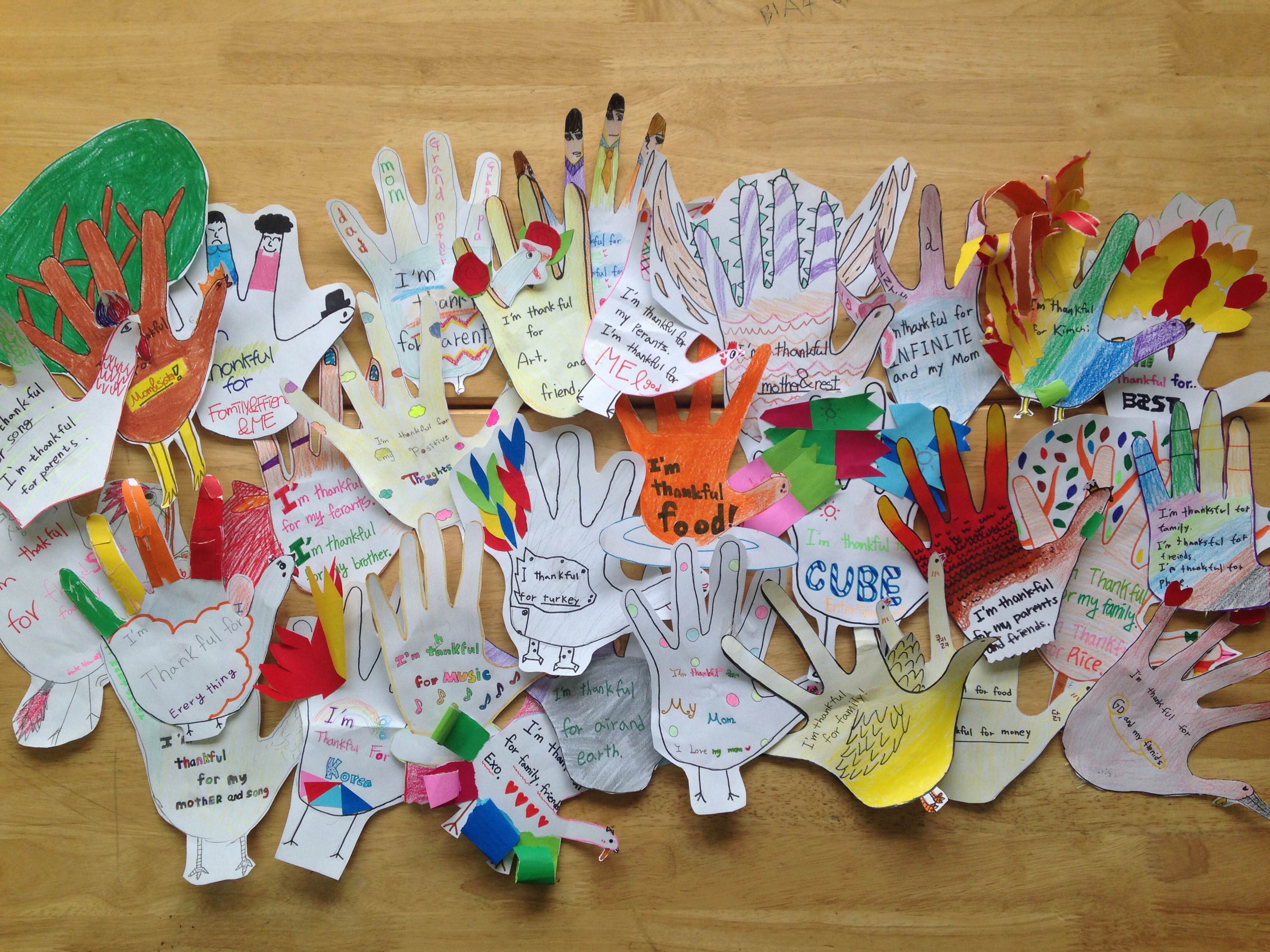
My Korean students’ hand turkeys. Assignment was to write what they were most thankful for. 🙂 Click image to view more closely, then click again to zoom! 


Well, it’s that time of year when teachers and parents look for books that celebrate Thanksgiving. Ultimately, Thanksgiving in the United States is a holiday to give thanks, eat copious amounts of food and spend time with family. The history of the holiday however is very much sugar coated and this is evident in a lot of Thanksgiving children’s literature…

If diverse literature is necessary for our children’s growth, we must be sure to let diverse voices speak, and speak clearly and true.

Most people don’t even know that the Pilgrims interacted with Wampanoag Indians. People just know about “Pilgrims and Indians.” There is rarely any discussion about what happened after the sharing of food (broken treaties, take-over of land, violence and disease). Some people think that children are too young to know the real history but I beg to differ; almost any topic can be brought to a level that children can understand and handle. The relationship between the Pilgrims and Wampanoag involved understanding and protection. There were treaties, agreements and opportunities for celebration. The Wampanoag taught the Pilgrims how to harvest and survive on their land. The first “Thanksgiving” as we’ve come to call it, happened in 1621 and was a result of the Pilgrims shooting off guns to celebrate a successful harvest. Wampanoag leader Massasoit sent warriors to check out the ruckus but realized they were just celebrating, so he and his men joined in on the celebrations, hunted and brought food.

Perhaps many teachers are anxiously waiting to see their students dressed up as Pilgrims and Indians but please keep in mind that 1) There is a long and problematic history of “playing Indian” and cultural appropriation in our country’s history 2) dressing up as Native peoples reinforces the idea that Native people are only in the past; most people in the U.S. can’t name any contemporary Native American activists, musicians, writers, actors, lawmakers, etc. Also, many children’s books don’t bother to accurately illustrate the regalia (not costumes) of Wampanoag people; any old “Indian outfit” will do as long as it is cute. Representation is important.

Listed below is one really cool book and several GREAT links and resources for your consideration this Thanksgiving season.

Happy Thanksgiving! Gobble Gobble!


1621: A New Look at Thanksgiving (I Am American) by Catherine O’Neil Grace and Margaret M. Bruchac, 2004 National Geographic Children’s Books, ISBN: 9780792261391

American Indian Perspectives on Thanksgiving– Really great resource from the Smithsonian National Museum of the American Indian

The Real History of Thanksgiving Teacher’s Guide– History Channel Resource

Best Thanksgiving Books for Children– Good list of books

Are You Teaching the Real Story of the “First Thanksgiving?”– Great Education World article

What Really Happened on the First Thanksgiving? -Indian Country Today Media Network Article

Oyate.com Thanksgiving article and book list

Salsa

Image Credit: Groundwood Books (House of Anansi Press), Jorge Argueta/Duncan Tonatiuh

Image Credit: Groundwood Books (House of Anansi Press), Jorge Argueta/Duncan Tonatiuh

I couldn’t stay away for long…I’m reviewing another book illustrated by Duncan Tonatiuh. Check out my review for his book Funny Bones: Posada and His Day of the Dead Calaveras. This book is written by Jorge Argueta and the topic is something many people will agree is very delicious, SALSA!

Salsa is bilingual (Spanish and English) and takes the reader on a journey through all aspects of salsa. It’s a “Cooking Poem” with rhythm and vivid imagery. Argueta begins the poem with a volcano whose hardened lava becomes the rock that makes molcajetes and tejolote which Nahua, Aztec and Mayan people used to grind, grind, grind delicious things. Cultural tradition continues to this day and the family in the story use these ancient tools to make delicious salsa! Lots of similies and metaphors fill the pages and bring the words and illustrations to life. Like musical instruments, they use their ingredients to make a “salsa orchestra.”  While enjoying the poem, we also learn how to cook salsa!!

As always, Tonatiuh’s signature illustrations draw from his indigenous Mexican heritage: I always enjoy the ears and lips of his people. He hand draws the images and digitally collages in interesting textures for color and design. I love how each illustration is framed top and bottom with a motif that reflects the stage of the recipe process; look at the wise chili peppers with faces like grandmother and grandfather! This beautiful book is a delight and your family or classroom will enjoy learning about delicious Salsa. 🙂

Recommended for: All ages
Great for: Cultural Diversity, Food Culture, Poem, History, Mexican Food, Family, Teamwork, Read-Aloud
Book Info: Salsa by Jorge Argueta/Illustrated by Duncan Tonatiuh, 2015 Groundwood Books (House of Anansi Press), ISBN: 9781554984428

Hiawatha and the Peacemaker

Image Credit: Abrams, Robbie Robertson/David Shannon

Image Credit: Abrams, Robbie Robertson/David Shannon

November is Native American Heritage Month and to kick off the month right, I’m paying homage to a place that’s special to me. I attended Cornell University in Ithaca, NY and the campus sits on Cayuga land. The Cayuga are one of the Six Nations of the Haudenosaunee (Iroquois Confederacy). I learned a lot from Haudenosaunee people and I love their land (it is gorges up there). So the first book I’ll review to celebrate this month is an AMAZING new picture book called Hiawatha and the Peacemaker by Robbie Robertson and illustrated by David Shannon.

This book tells the story of how the warring nations of the Haudnosaunee came together in peace. Hiawatha is a sad man with anger in his heart because the evil Onondaga Chief Tadadaho killed his wife and children; he is hell-bent on revenge. One day, a man called the Peacemaker comes and tells Hiawatha that he needs him to carry his message of Peace, Power and Righteousness to all the nations. Hiawatha has to look inside himself to realize the power of forgiveness.

This story will be familiar to some readers and brand new to most but what shines about this book is not only its powerful message, but that it’s by a Native American author (Robertson is Mohawk and Cayuga) and Shannon’s oil paintings are beautiful. There are many books about Native peoples by non-Native authors; some are well researched and are respectful but many are not. Robertson tells his people’s story and that in and of itself gives power to this book. David Shannon worked with Robertson to create bold illustrations that carry the power of the story. They are so very strong. This book will appeal to artists, lovers of Native Studies and history, and any child or adult who craves a great story.

Recommended for: All ages, especially 4th grade and up
Great for: History, Native American Heritage Month, Cultural Diversity, Discussion, We Need Diverse Books
Book Info: Hiawatha and the Peacemaker by Robbie Robertson/Illustrated by David Shannon, 2015 Abrams, ISBN: 9781419712203

Mufaro’s Beautiful Daughters

Image Credit: Lothrop, Lee & Shepard Books, John Steptoe

Image Credit: Lothrop, Lee & Shepard Books, John Steptoe

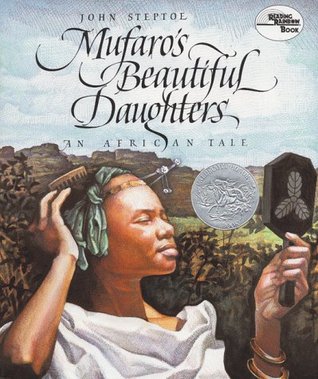
Can we just take a moment to admire how beautiful the cover is? It’s easy to see why this book won a 1988 Caldecott Honor Award. This is one of my absolute favorite books from my childhood because it was one of the first books in which I saw a reflection of myself. Look at that beautiful black girl on the front!

Author/illustrator John Steptoe created this African-Cinderella story after being inspired by African folktales published in a collection called Kaffir Folktales by G.M. Theal in 1895. Theal was a South African historian who also felt it was his duty as a Christian White male to civilize the Africans. So from African roots to colonization to a Black artist living in Brooklyn, these stories traveled and inspired. Steptoe created a book that celebrates Africa. He uses water soluble inks applied by brush and pen and with this technique, his illustrations glow. They are so beautifully vibrant!

In Mufaro’s Beautiful Daughters, Mufaro has two daughters named Manyara and Nyasha. Manyara is a rotten person and treats her humble and kind sister Nyasha horribly. One day it’s announced that the Great King is looking for a new wife and only the most worthy woman will become his Queen. Manyara’s selfishness catches up with her and Nyasha’s gentle nature and kindness give her all the treasures she deserves. This twist on the western Cinderella tale is very sweet and is full of morals for people of all ages to learn from. If you have a child who loves Cinderella stories, add this one to their collection! You’ll enjoy reading it together.

Recommended for: All ages
Great for: Fairytales, Cultural Diversity, Diversity, Morals, History, Discussion
Book Info: Mufaro’s Beautiful Daughters by John Steptoe, 1987 Lothrop, Lee & Shepard Books, ISBN: 9780688040451

Respect My Canon! (Please)

Image Credit: American Girl

Image Credit: American Girl, http://www.americangirl.com

I didn’t grow up reading classics that may be a part of your personal canon. I wasn’t very interested in books like Little House on the Prairie or Ramona the Brave because I had my trusty Berenstain Bears books AND several books that featured little black girls. I connected to those images unconsciously. Naturally, content was the most important thing to me in a book, but how could I not want to see someone like me? A black girl doing cool things?! Yeah, let’s read about that! [Shout out to the American Girl, Addy]

Mufaro’s Beautiful Daughters was one of my favorites growing up and still is; click here to read my post about it. My father was very Afrocentric, so I had many books about Africa and Black History on my bookshelf. I went to a mostly African-American Catholic elementary school and was lucky enough to have as my second grade teacher Mrs. Reid, who taught us about Black History. I distinctly remember the day we learned “We Shall Overcome.” This is where I come from. So I often wonder why it’s “expected” that I’ve read certain western children’s classics, especially in my personal reading time, as a child. I respect the western children’s classics but I don’t necessarily relate to them.

I’m just asking you to respect my canon. It is powerful too. More importantly, respect the fact that many children of color have a hard time connecting to what they read. Every child is different. Some kids, you throw any book at them and they’ll devour it. Other kids have to find that one perfect book they can relate to, that lights a spark for them. These kids might see a positive representation of themselves in a book and think quietly, “Oh hey, I can do that too?” and then they’re off. That’s all it takes. So guess what we need? MORE of these books. Let’s encourage these books in order to support these authors to get these stories out there for our children.

People

Image Credit: Doubleday Books for Young Readers, Peter Spier

Image Credit: Doubleday Books for Young Readers, Peter Spier

People takes a snapshot of the world. This book has a lot of emotional meaning for me because it was one of my favorites as a child. I still have my original copy from 1980. Look what I wrote inside the front cover:

Image for People

I’ve always loved meticulous illustration and Peter Spier doesn’t miss any details. His bold and colorful illustrations of peoples, towns, foods and traditional games are amazing. People is essentially about cultural diversity. His simple sentences prompt reflection and discussion about our similarities and differences. Children learn about tolerance, humanity and how varied our cultures are. As I read through this book again, I thought “Well goodness, he taught me about cultural relativism!” I’m pretty certain that this book is one of the reasons why I studied cultural anthropology in college. It sparked an early interest in learning about all types of people.

Though there are many great things about this book, there are some problems. Some parents and teachers might not like that Adam and Eve are the first people in the book. Spier does a fair amount of cultural stereotyping with his illustrations and the book is rather dated in many ways. So why am I recommending this book? I’m recommending it because I believe that it’s still an excellent book that people of all ages can learn from. For his mistakes, he has many more successes and a book like this one is still a good resource for a curious child. Parents and teachers can use these stereotypes (ex. Native American houses in USA are teepees/The Japanese family always wears Kimono) as learning tools. By encouraging questions and prompting discussion about these issues, children can take away more valuable lessons. A teacher or parent can also challenge their children to “update” this book by having them choose a culture featured and research how they live today.

**I reviewed the 1980 version but there is a more updated version now available. Information below

Recommended for: 1st Grade and Up
Great for: Cultural Diversity, Cultural Relativism, Discussion, Anthropology
Book Info: People by Peter Spier, 1988, Doubleday Books for Young Readers, ISBN: 9780385244695

Remembering Through Books

IMG_2368 (1)

A small but mighty collection of books

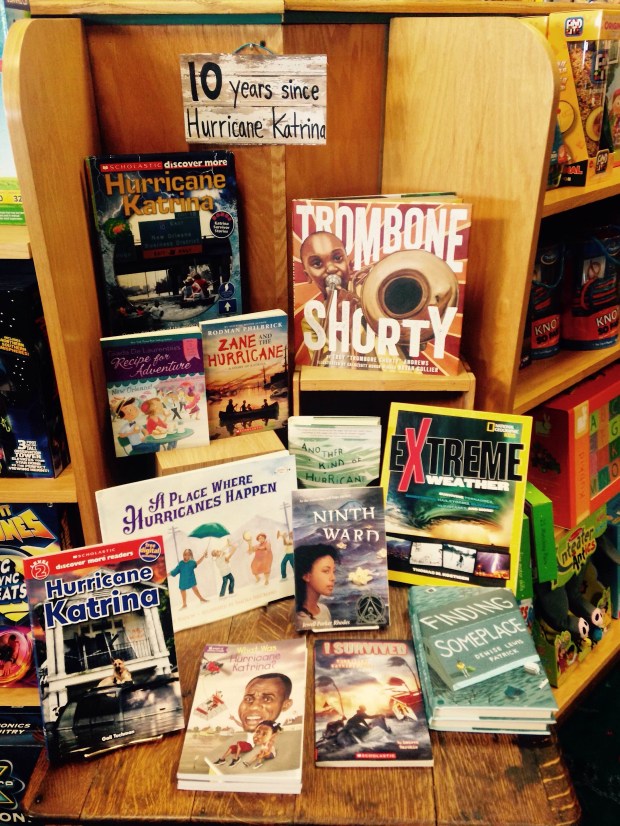
Back in August, we took time to reflect on ten years since the devastation of Hurricane Katrina. So many lives were lost and many communities are still coping with the aftermath of the hurricane. Hearing about the tenth anniversary made me think about how I can connect the people of my community to this important anniversary, as a bookseller. I gathered these books and made a simple display. In this way, a casual bookstore-browser, especially children, can be exposed and introduced to important social events. My table also got a seal of approval by author Renee Watson (A Place Where Hurricanes Happen, Harlem’s Little Blackbird, This Side of Home)!! 🙂 The titles I used are listed below and click here for information about Hurricane Katrina.

Scholastic Discover More Reader Level 2: Hurricane Katrina (9780545829540)

Scholastic Discover More: Hurricane Katrina (9780545829564)

Trombone Shorty by Troy Andrews (9781419714658)

Giada de Laurentiis’s Recipe for Adventure: New Orleans (9780448462592)

Zane and the Hurricane: A Story of Katrina by Rodman Philbrick (9780545342391)

Another Kind of Hurricane by Tamara Ellis Smith (9780553511932)

Ninth Ward by Jewell Parker Rhodes (9780316043083)

A Place Where Hurricanes Happen by Renee Watson (9780385376686)

What Was Hurricane Katrina? by Robin Koontz (9780448486628)

I Survived Hurricane Katrina by Lauren Tarshis (9780545206969)

Finding Someplace by Denise Lewis Patrick (9780805047165)

National Geographic Kids, Extreme Weather: Surviving Tornadoes, Sandstorms, Hailstorms, Blizzards, Hurricanes and More (9781426318115)

Funny Bones: Posada and His Day of the Dead Calaveras

Funny Bones

Image Credit: Abrams, Duncan Tonatiuh

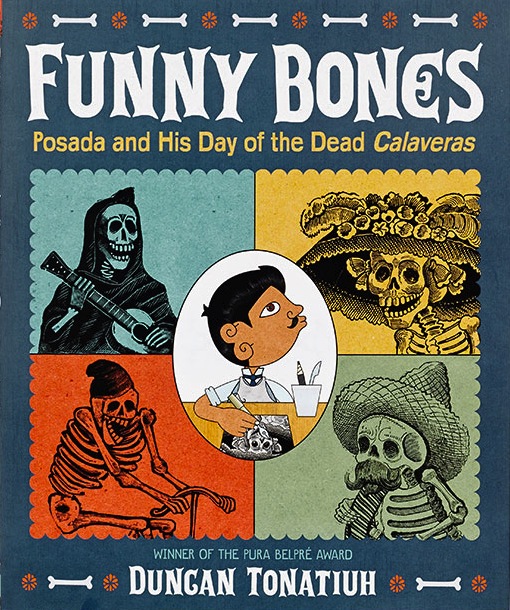
Author/illustrator Duncan Tonatiuh is one of my current favorites. I love not only the abundance of cultural and historical information in his picture books but his art style is simply amazing. It’s so smooth and modern while being unique and a throwback to his indigenous Mexican heritage. Does it get better than that? Not really and that’s why I’m loving his books so much.

Because Dia de Los Muertos (Day of the Dead) is coming up soon, I’m discussing his newest book Funny Bones: Posada and His Day of the Dead Calaveras. I’ve had an interest in Dia de Los Muertos ever since I taught a lesson about it to my Korean students. I wanted to expose them to a cultural tradition that was different but similar to one of their own. Koreans celebrate a holiday called Chuseok where they honor and pray for their dead ancestors. Since there are some similarities to Dia de Los Muertos, I thought the kids might really get something out of it!

Tonatiuh does an excellent job of making culture, art critique and history accessible to kids. Some kids really enjoy the bio books and I think they’ll love this one. We learn about the life and art of Mexican artist Posada who is responsible for making the crazy and vibrant Calavera (bone people) illustrations popular. He also documented important political events like the Mexican Revolution.

What I enjoyed most about this picture book is how Tonatiuh encourages children to do art critique. He reproduces Posada’s art, blends it with his own and poses questions about the meaning of the art all while telling Posada’s story. This is awesome! Because the book is partially about Dia de Los Muertos, it encourages you to think about life and death. This may seem heavy but like the holiday, it is about the celebration of life as well as the celebration of a great Mexican artist!

Recommended for: Ages 7 and up
Great for: History, Art History, Diversity, We Need Diverse Books, Holiday, Dia de los Muertos, Day of the Dead, Artist Bio, Biography, Non-Fiction, Mexico
Book Info: Funny Bones: Posada and His Day of the Dead Calaveras by Duncan Tonatiuh, 2015 Abrams, ISBN: 9781419716478