Image Credit: Orchard Books (Scholastic Inc.), Nikki Grimes/E.B. Lewis
“…Bessie made me believe I could be anything.” – Young Fan
I’ve been wanting to review a book about Bessie Coleman for quite a while. I found two contenders and ultimately I chose this one over Fly High! The Story of Bessie Coleman. Though that book is also good, Talkin’ About Bessie: The Story of Aviator Elizabeth Coleman is a stronger book in execution, creativity and memorability. It has more heart and that’s exactly what Bessie was about. I recommend Fly High! The Story of Bessie Coleman for younger readers.
Talkin’ About Bessie has a unique concept; 20 family members, acquaintances and friends come together after Bessie Coleman’s funeral to speak about her. Instead of a straightforward non-fiction narrative style, we get something special; reflection based on fact, crafted by author, Nikki Grimes.
Bessie grew up poor in segregated Texas, picking cotton with her many siblings. She loved numbers and words from an early age and her mom always encouraged her to read the bible. Though her father left their family when she was young (which left her little time for childhood), she kept dreaming. When an adult, she moved to Chicago and after taking many jobs found inspiration from the blacks who ran the newspaper The Defender. She decided to go to France and get her pilots license and when she set her mind on that goal, she was determined to follow through! Bessie Coleman became the first person of African descent in the US to get an international pilot’s license and came back to the US to became an aviatrix. She wanted to encourage blacks to fly and worked towards raising funds to open a flight school for her people. Her personality was bigger than life and she was (and still is) an inspiration.
Nikki Grimes’ writing is great. The characters’ various speaking styles bring them to life. Each page has a “photo painting” in the corner with the name of the person speaking and a gorgeous full page illustration. This is a nice design. One aspect of the book that didn’t make sense to me though was the character “Laundry Customer.” She’s a white character who employed young Bessie and her family (created by Grimes). Her words are very privileged and she makes it clear that Bessie was, from an early age, challenging and out of line for a young Negro girl. So why would she be present at Bessie’s funeral?? Though I understand the author’s desire to help us understand the segregated world Bessie lived in, it seems out of place and the other characters do a fine job of creating context for readers.
E.B. Lewis’ art is absolutely beautiful. This kind of story requires a very straightforward type of illustration that serves to compliment/enhance the words. His watercolors are meticulous and he does a great job of creating place, mood and character. I hope you’ll take the time to read this excellent book that honors Bessie Coleman’s spirit!
P.S. Here’s some backstory from the author Nikki Grimes! Part 1 here and Part 2 here.
Recommended for: 2nd Grade and up Great for: Womens History Month, History, Black History, African-American, Diversity, Black Girl Magic, Black Girls Rock, Aviation, Determination, Confidence, Inner Strength, Family, Relationships, Struggles, Segregation, Racism, Sexism, Tragedy, Role Model, Dreams, Biography, Non-Fiction Book Info: Talkin’ About Bessie: The Story of aviator Elizabeth Coleman by Nikki Grimes/Illustrated by E.B. Lewis, 2002 Orchard Books (Scholastic Inc.), ISBN: 9780439352437
Image Credit: Chronicle Books, Pat Zietlow Miller/Frank Morrison
Sometimes it’s better to be friends than rivals, especially when you’re working towards the same goal!
In The Quickest Kid in Clarksville, Alta’s role model is the amazing sprinter Wilma Rudolph. The story takes place in 1960 when everyone in Clarksville, Tennessee is preparing for the big parade to celebrate Wilma’s 3 Gold Medals at the Rome Olympics. Wilma is the fastest woman in the world and Alta is the fastest kid in Clarksville. She’s confident in her feet. Problem is there’s a new girl named Charmaine who’s just as confident in her speed and struts around like she rules the block! It doesn’t help that she has shiny new sneakers while Alta’s are worn down. Nevertheless, Alta challenges her to a race! On parade day, Alta and her friends struggle to get their bulky banner to the parade site and reluctantly accept Charmaine’s help. Relay-style (just like Wilma and her team) they arrive at the parade to celebrate their champion! Representation really matters and I can’t imagine how much Wilma meant to young black girls in the 60s (and now!).
Image Credit: Chronicle Books, Pat Zietlow Miller/Frank Morrison
I enjoyed the writing of this book; there’s a nice rhythm and just the right amount of sass and confidence. Morrison’s beautiful watercolor illustrations pair perfectly with the words. Just take a look at the cover! Alta knows exactly who she is! Throughout the story, we see determination, confidence, worry, shame and happiness on her face and in her body language. My favorite spread is when she’s ready to run, banner in hand with furrowed brows, chanting “Wil-ma Ru-dolph. Wil-ma Ru-dolph” in her head to boost her heart and her feet.
Just gorgeous!
P.S. Check out author Pat Zietlow Miller’s awesome Nerdy Book Club post about the process of making this book/finding the right story. Also check out this great photo of Wilma with her parents during the parade! ❤
Recommended for: All ages Great for: Determination, Confidence, Friendship, Rivals, Relationships, Teamwork, Sports, Track and Field, Black Girl Magic, African American, Diversity, History, Segregation, Clarksville TN, Wilma Rudolph, Rhythm, Read-Aloud Book Info: The Quickest Kid in Clarksville by Pat Zietlow Miller/Illustrated by Frank Morrison, 2015 Chronicle Books, ISBN: 9781452129365
Image Credit: Jump at the Sun (Hyperion Books for Children), bell hooks/Chris Raschka
If I could ask any illustrator to draw my portrait, I’d choose Chris Raschka because I see myself in his illustrations.
Sitting still in a chair while mom, aunt or grandma cornrows/straightens/combs/dries our hair is something many black women grow up experiencing. One of my best memories is when my dad would sit me in front of him and speed dry my dreads with a towel, making me laugh. Hair care is a past-time, talking time, learning time and…waiting time. Oh sometimes it takes so long. >_<
“Nappy” is a term that means “unkempt” or “messy” or generally “rough” in black-hair-speak. If someone says your hair is nappy, it’s not a nice thing to say. Black women have a long history of resisting (or accepting) western hair norms but we’re always creative. We embrace our natural curls, we straighten, we twist, we curl, we weave, we grow afros. Black hair culture is fascinating.
Image Credit: Jump at the Sun (Hyperion Books for Children), bell hooks/Chris Raschka
Happy to Be Nappy is bell hook’s book for little black girls and their hair. It’s about loving your hair in every capacity. Sometimes it’s frizzy, sometimes it’s neatly braided, sometimes it’s flat but it’s always a crown. This book celebrates being happy with the way you look and proud of the way you feel and pairs excellently with I Like Myself! Any child can relate to the happiness and confidence exhibited by the girls in this book.
Chris Raschka’s art is perfect. His watercolor and bold black lines bring Happy to be Nappy to life. The pages are filled with blotchy colors, wide and thin strokes and swoops of black piled on top of brown faces with simple, beautiful expressions. Raschka really lets the watercolor soak into the paper and the results are gorgeous. ❤
I’m so nappy happy I discovered this book and I hope you’ll seek it out to enjoy too! 🙂
Recommended for: All ages Great for: Hair, Black Hair, Girl Power, Happy, Empowerment, Family, Relationships, Pride, Black Girls Rock, Black Girl Magic, Confidence, Self Esteem, Diversity, Read-Aloud, Rhyme Book Info: Happy to be Nappy by bell hooks/Illustrated by Chris Raschka, 1999 Jump at the Sun (Hyperion Books for Children), ISBN: 9780786804276
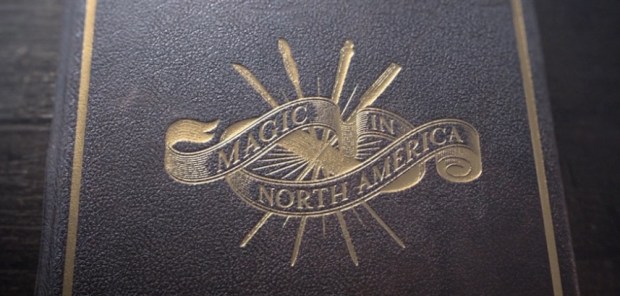
There’s no denying you’re one of the most brilliant minds of our era. You’ve created worlds that we get lost in and complex characters that we love dearly. But with MAGIC IN NORTH AMERICA, something went wrong.
Maybe it’s that you’re not from North America? But surely you did your research into the complexities that are the native peoples of this continent…Maybe it’s that you didn’t grow up constantly bombarded by stereotypical images of native people on TV, in movies, as Halloween costumes, etc.? Maybe it’s because you didn’t go to school here and didn’t receive an incomplete history of native peoples that basically stops after “First Contact” & “Thanksgiving” and ignores modern native people? Perhaps…
There are real issues here. You’re dealing with real people, cultures, traditions and religions and with that comes a lot of responsibility. Native people are already heavily stereotyped around the world as “Magical Beings” and now…they’re in your magical canon! Not only do you refer to them as a monolithic group (there are hundreds of nations in the US alone), you *seem* to imply that native wand-less magic is powerful but not as refined as European magic (due to the power of a wand).
I encourage you, Ms. Rowling, to respond to native academics, fans, etc. who are asking you tough, but important questions. Debbie Reese, Dr. Adrienne Keene and many others have tweeted at you. Here, here & here are some EXCELLENT articles that delve into your work from a native perspective. This one is excellent as well. I ask you to check out Debbie Reese and Dr. Adrienne Keene’s websites in general. Just look around. They do great work.
Let’s get this discussion going and please let us know who you consulted for this project because we’re SUPER CURIOUS. (at least I am…)
Representation Matters.
It really does and yes, anyone CAN write a story, but I’d hope they LISTEN and learn as much as possible before releasing it to the world, especially when you’re dealing with living people, religions, and NATIVE KIDS. There’s a long history of misrepresentation, exploitation and stereotyping of native peoples.
MAGIC IN NORTH AMERICA is problematic and we await your response…
Not only is the cover beautiful, well designed and eye-catching, the entire book is gorgeous.
The story begins with young Marian in her house, set in the middle of a grand stage. When Marian Sang is a moving and beautifully told story of the life of singer Marian Anderson. There was never a moment she didn’t love to sing and people loved to listen. She was passionate about her faith and her music and by the age of eight, was performing for choruses in Philadelphia. Early on, Marian decided that music was something she wanted to dedicate herself to but because of her race, she was turned away from formal lessons.
Prejudice is intertwined with Marian’s story. Even though she was invited to sing across the country, she couldn’t even get a hotel room! But she continued to rise and share the gift of her voice with the world. Like Josephine Baker, she came back to the US and faced the challenge of performing as a black woman. The D.A.R. might’ve denied her performance at their hall but little did they know Marian’s spirit was destined for greatness. Eleanor Roosevelt and President Roosevelt set her up to perform at the Lincoln Memorial instead!! That performance was groundbreaking and memorable not only for the integrated crowd that witnessed it, but for the entire country. Marian continued to sing, inspire and move audiences for years to come.
The art!! Selznick uses rich acrylics and his palette is lush and golden. He uses only browns, golds, rose golds, pinks, and creams for entire book. The layout is very wide and grand. The large pages are perfect for highlighting his art. His paintings glow and the combination of his art with Pam Muñoz Ryan’s beautifully poignant writing is perfect. What a team, what a book and what a story of an amazing woman!
P.S. Take some time to read through the notes in the back about the author and illustrator’s loving and thorough research. Also check out Leontyne Price: Voice of a Century. She was inspired by Marian Anderson!
#BlackGirlMagic #InternationalWomensDay
Recommended for: All ages Great for: Family, Love, Relationships, Faith, Music, Girls in Music, Diversity, Black Girl Magic, Black Girls Rock, Determination, Inner Strength, Prejudice, Segregation, Choir, Opera, Spirituals, Integration, Philadelphia, Europe, Non-fiction, Biography Book Info: When Marian Sangby Pam Muñoz Ryan/Illustrated by Brian Selznick, 2002 Scholastic Press, ISBN: 9780439269674
Image Credit: A Neal Porter Book, Roaring Brook Press (Macmillan), Miranda Paul/Jason Chin
In this rhythmical, science read-aloud, we follow a brother and sister through seasons and the water cycle. Like the water cycle, the story is cyclical. It starts in spring-time when the siblings spot a lone turtle in their pond. Water goes into a glass and in a dish for the turtle but it also becomes steam for the hot cocoa they share with their father! Miranda Paul tells a story of water changing in a unique way. Steam is steam but it also changes form to become clouds, which can form low to become fog and on and on.
As I write this review, there’s a light rain and it’s very foggy where I am. Snow is leftover from yesterday and it’s starting to melt as the rain hits it. Maybe I should call my friends and have a snowball fight like the children in this book?! 🙂 Jason Chin does an amazing job of pairing Miranda Paul’s poetic lines with bright and colorful illustrations. He creates a very complete world with his art; after finishing Water is Water, I felt like I knew how to travel from the family’s house to the lake, to school and back again! His watercolor and gouache clouds and fall leaves are beautiful and I enjoyed little details like the reflective, wet pavement on the school grounds.
Image Credit: A Neal Porter Book, Roaring Brook Press (Macmillan), Miranda Paul/Jason Chin
The facts at the back of the book about the water cycle are GREAT because they refer to scenes in the book. Children can make connections between the story’s words, illustrations and terms like “evaporation.” This book is for storytime and for science class! Paul writes in an easy to understand way that young children can grasp. The story will make them smile and by the end of the book, they’ll understand how water moves from form to form.
Oh and hey, the children’s parents are black and white!! The story isn’t ABOUT their interracial family…they just happen to be so. It’s a quietly powerful display of diversity. Also the siblings’ friends are very diverse and happy. I love seeing happy children of many ethnicities in a picture book.
Be sure to check out Water is Water with your classroom and family…and go out and play in the rain!!
Recommended for: All ages Great for: Family, Friendship, Relationships, Diversity, Weather, Seasons, Science, Water Cycle, Recycling, Imagination, Community, Animals, Nature, Read-Aloud, Rhythm Book Info: Water is Waterby Miranda Paul/Illustrated by Jason Chin, A Neal Porter Book, 2015 Roaring Brook Press (Macmillan), ISBN: 9781596439849
Image Credit: Candlewick Press, Carole Boston Weatherford/Ekua Holmes
“We serve God by serving our fellow man.”
Fannie Lou Hamer spent her entire life doing just that, fighting for black people’s rights to equality and justice. This mighty woman was one of class, power, strength and dignity. I see my grandmother in Fannie Lou Hamer’s big body and I see my mother in her strength despite her weariness. She suffered yet continued to rise and speak, and sing, and empower.
Weatherford does an amazing job (as usual) of crafting Fannie’s voice as we follow her story from childhood to adulthood. The words of the book are a combination of Weatherford’s storytelling and Fannie’s powerful quotes. While reading, I reflected on history and couldn’t help but compare the struggles people faced during her time to those of people of color today. I admire her strength. She grew up poor, the youngest of twenty children, picking cotton in the fields while living and breathing injustice. From an early age, she saw that black people didn’t have it equal; that they had to work hard just to get a little.
Fannie eventually marries and loses the ability to have her own children (her body is policed by white supremacy and classism) but she yearns for change and starts to push for black voters’ rights. Her determination to vote brings attacks on her life but she keeps moving forward to become a leader of the SNCC. Her spirit is never broken. She runs for Congress several times and reaches back to help the younger generation with Freedom Summers. Towards the end of her life she starts programs to help poor folks and also wins a lawsuit to integrate the public schools of her home county in Mississippi.
Image Credit: Candlewick Press, Carole Boston Weatherford/Ekua Holmes
I spent just as much time enjoying Ekua Holmes’ illustrations as I did Weatherford’s words. After reading the rich text I’d turn to the illustrations and let them have their turn speaking to me. So much is packed into her painting-collages; varying shades of brown for skin, angular faces, flower bursts, patchwork, and texture. I love the pages where young Fannie holds a cotton plant quietly as her family members drag the long white bags that resemble ghosts and the final page, an older Fannie’s strong and beautiful profile with the American flag behind her. Weatherford’s books always have amazing art and this one is no exception.
When I think on this woman, I wonder…was there ever a selfish bone in her body? No. Fannie Lou Hamer’s life was in every way about service.
What a picture book. What a way to start many meaningful discussions. Voice of Freedom Fannie Lou Hamer: Spirit of the Civil Rights Movement is deserving of all the honors it has received.
We’re still pushing ahead Fannie.
Recommended for: 2nd Grade and up Great for: Civil Rights, Diversity, Discussion, Jim Crow, Segregation, Racism, Community, Family, Relationships, Black Girl Magic, Strength, Determination, Friendship, African-American, Social Issues, Social Justice, Injustice, Black History Month, Black History Month Children’s Books Book Info: Voice of Freedom Fannie Lou Hamer: Spirit of the Civil Rights Movementby Carole Boston Weatherford/Illustrated by Ekua Holmes, 2015 Candlewick Press, ISBN: 9780763665319
Image Credit: Carolrhoda Books (Lerner Publishing Group, Inc.), Calvin Alexander Ramsey/Floyd Cooper
Family vacations are an American staple right? They’re when we take time away from our jobs to get in a car, train or plane to travel and have fun. But can you imagine needing to rely on a little book to help you stay safe on the road? The danger isn’t from other cars or weather conditions; the danger is from people who don’t like you because of the color of your skin.
Ruth and the Green Book is a story based on real historical events. Like Ruth and her family, in the 50s, many Black families were prospering in the North but had to take precautions when traveling, especially back down South and into Jim Crow. In this story, Ruth’s dad gets a brand new car and they head from Chicago to Alabama to visit grandparents. Ruth tells the story from her perspective and we experience her confusion and anger towards segregation. She doesn’t understand why they can’t use the restroom at the gas station and why the white hotel owner won’t let them stay in the hotel but she sees the effects these events have on her family.
Image Credit: Wikipedia.org (New York Public Library) 1940 Edition of The Negro Motorist Green-Book
“Whites Only” signs are everywhere on their journey but her family sings joyfully as they drive and enjoy each other’s company. They make do as oppressed people do! Ruth learns the hard truth about Jim Crow, but luckily a family friend along the route tells them to look out for Esso Gas Stations. Esso is one company that accepts black business. At the first Esso Gas Station they see, a black worker sells them The Negro Motorist Green Book which lists safe places for Black people to eat, sleep and rest on the road. As they travel, Ruth grows up and makes a new friend at one of the inns they stay at. The Green Book helps Ruth and her family get to Alabama safely and she reflects on how thankful she is for a nationwide network of black people looking out for each other!
I love Cooper’s illustrations. He uses muted colors of browns, greens, and blues and it gives the feel of an old soft crackly television. Warm, expressive brown faces and Ruth’s loving family are beautiful to see. I really like the design of the cover of the book with its swooping green retro font, Dad’s brand new “sea mist” green Buick, and Ruth smiling proudly as her mom holds her steadily (strength, determination and a little worry in her expression.) This book is excellent for ALL ages because it discusses an important (and probably little-known) aspect of Black History. Check it out and talk about it!
P.S. For more information on The Negro Motorist Green Book and to browse through one online, click here and here. These links are super cool. I really encourage you to take a look!
Recommended for: 1st Grade and up Great for: Civil Rights, Diversity, Discussion, 1950s America, Jim Crow, Segregation Community, Family, Relationships, Friendship, Travel, African-American, Social Issues, Determination, Injustice, Black History Month, Black History Month Children’s Books Book Info: Ruth and the Green Bookby Calvin Alexander Ramsey/Illustrated by Floyd Cooper, 2010 Carolrhoda Books (Lerner Publishing Group, Inc.), ISBN: 9780761352556
The Book Itch was recently awarded the Coretta Scott King (Illustrator) Honor and for good reason. Not only are the illustrations cool but the content!! The content is gloriously heavy. It’s inspirational and thought provoking. This is a unique book.
The story is told by the son of Lewis H. Micheaux, the founder & owner of the National Memorial African Bookstore in Harlem. “Louie” as his father calls him, takes us back to 1960s Harlem, explains the significance of the bookstore and tells a story that honors his father’s brilliance and determination. The bookstore is more than a bookstore, it’s a gathering place, a refuge, and space for knowledge and politics. All types of people visit, even Muhammad Ali and Malcolm X! We get to experience Louie’s sheer amazement and adoration when he meets such powerful Black figures of the time.
I love Lewis H. Micheaux’s way with words. His catch-phrases and poetic slogans are catchy and real. “Don’t get took! Read a book!” encourages young people of color to educate themselves through reading; a message as important today as it was in 1960s America! He constantly encourages his son to read and learn so that he can sort out the truth of the world. This book doesn’t shy away from discussing civil rights and racial issues; the bookstore often hosts rallies and Micheaux jokes “Anytime more than three black people congregate, the police get nervous.” The later half of the story explores Micheaux’s close friendship with Malcolm X. As the reader finishes the book, he/she is left thinking about the power of words and are reminded that some are willing to die for freedom.
R. Gregory Christie’s paintings are excellent at creating place and mood. He places the reader directly in Harlem, on its streets and in the bookstore with its large collection of books knowledge. He draws long lanky bodies again like he did in Freedom in Congo Square but this time he focuses on detailed faces and expressions. His palette is dark and earthy and suits the story.
Please take time to read and discuss this book! The last few pages tell more about Lewis H. Michaeux’s life and there’s a great Author’s Note. I’m so grateful that Vaunda Micheaux Nelson created this book to share her great-uncle’s story; it’s a moment of Black History that I didn’t know about. The Book Itch is one of the strongest non-fiction historical books for children to come out in 2015. Oh the power of books…and words.
P.S. I love endpapers and this book has GREAT ones! Check out some of Micheaux’s “poetry” 🙂
Malcolm X delivering a speech outside of one his favorite places, The National Memorial African Bookstore, in 1961.
Recommended for: 2nd-3rd Grade and up Great for: Civil Rights, We Need Diverse Books, Diversity, Discussion, 1960s America, Community, Black Bookstores, Family, Relationships, Friendship, Harlem, Lewis H. Micheaux, Malcolm X, Muhammad Ali, Non-Fiction, Power of Words, Social Issues, The National Memorial African Bookstore, Determination, Injustice, Black History Month, Black History Month Children’s Books Book Info: The Book Itch: Freedom, Truth and Harlem’s Greatest Bookstoreby Vaunda Micheaux Nelson/Illustrated by R. Gregory Christie, 2015 Carolrhoda Books (Lerner Publishing Group, Inc.), ISBN: 9780761339434
Duncan Tonatiuh’s work is some of the most important work in children’s literature right now. His books speak truth, teach our realities and his art isn’t too bad. 😉 He creates picture books that cover topics like immigration, city vs. rural life, friendship, art history, discrimination, prejudice, determination and history. You can read my reviews for Funny Bones and Salsahere.
Funny Bones was the very first book I reviewed for my blog, so it holds an important place in my blogging life. Through reading and experiencing his books, I became more interested in learning about him. He’s a very cool person! Let’s get on to the interview…
Alia: Q1. What are three words to describe yourself?
Duncan: Thats a tough one. One would be responsible or dependable.
Alia: Yeah I know! I like to ask people this though…
Duncan: Creative maybe? Smart sounds conceited but something to do with being a thinker. Thoughtful? That is what I can think of for now.
Alia: That’s great. Thank you.
Duncan: Calm maybe?
Alia: 🙂
Duncan: No problem.
Alia: Q2. Congratulations on your baby daughter! Has having a child influenced how you see yourself as a storyteller?
Duncan: I’m sure it has. But I’m not quite sure how yet. It’s definitely had a huge impact in my life. My world does not revolve around me anymore by any means. And I feel an enormous and unconditional love for my daughter. It’s a wonderful feeling.
Alia: Q3. The first time I saw your books, your art made me cheer. It’s such a beautiful display of indigeneity. The Mixtec codex influence. Do you mind discussing your style and how it developed?
Duncan: I went to design school in New York City. There is a large Mixtec community there. I became friends with a Mixtec guy named Sergio. For my senior thesis I decided to make a small comic book about his journey from his small village in the south of Mexico to working as a busboy in a restaurant in New York.
One of the first things I did when I began that project was go to the library to look up Mixtec artwork. I found images of Mixtec codex from the 15th century. I was blown away by them. I grew up in Mexico, so I was familiar with Pre-Columbian art but never paid much attention to it. When I saw images of the codex at the library I decided I would make a modern day codex of Sergio’s story.
I began emulating the drawings from the codex. I drew every one in profile. I stylized their ears to look like a number 3. I drew the character’s entire bodies, etc. I collaged my drawings digitally though to make them feel more modern.
Alia: That’s awesome! You kind of touch on that modern day application of art in your book about Diego Rivera. How he’d view the world now and create it in his style. I love how you take ancient art from your culture and make it modern for today’s children. I really really like how you use digital collage too! It makes the images pop.
Duncan: Thanks!
Alia: No problem!
Image Credit: Dear Primo, Abrams Books for Young Readers, Duncan Tonatiuh
Q4. What was your favorite food growing up?
Duncan: Hmmm. Maybe enchiladas or pozole. When I was a kid I asked my mom why my Dad always got to pick what we were having for lunch. She said it was because he gave her the money to buy the food. At some point I got a job after school helping out a jewellery maker. When I got paid I gave the money to my mom and asked her to make enchiladas.
Alia: Hahaha. That sounds like something my mom would say. 🙂
Duncan: lol
Alia: Q5. Your books are very powerful and full of history and perspective. They also have the ability to reach any child in the world. What do you hope children take away from your books?
Duncan: Thanks! Well, first and foremost I hope they find my books entertaining and interesting to look at. I make books about things that interest me. Hopefully young readers will find those things interesting and important too. I try to have a message in my books but I hope they don’t feel preachy or didactic.
When it comes to Latino children I hope they see themselves, their family and their community in the books. Hopefully they feel pride and realize that their voices and stories are important. For non-Latino children, I hope they learn about a different culture. With books like Pancho Rabbit or Separate Is Never Equal, I hope that they feel empathy and understanding of the struggles Latino children and people have to face sometimes.
One of the most rewarding moments I’ve had as an author is when a group of 4th graders from an Elementary in Texas wrote a multi-voice poem about their border crossing experiences after they read Pancho Rabbit. I feel my book encouraged them to speak and realize that their voices and stories are important. Let me find the link:
Alia: Thank you for sharing and that is amazing. I’m glad for your books because it is so important to not only share stories, but to create stories that children can relate to. Children of color sometimes need that boost, that representation. That’s why diverse books are so important. For teaching and learning, and inspiring as in the case of those 4th graders! 🙂
Duncan: 🙂
Alia: Q6. Congratulations on all the recent honors (Sibert Award/Pura Belpré Honor/NCTE Honor) for Funny Bones! Have you received any feedback from kids on that book?
Duncan: Thank you! I’ve received a few calavera drawings from students. And I’ve seen projects that they’ve created at school for the Day of the Dead. I look forward to receiving more feedback from kids and seeing how they respond to the book and what resonates with them.
Alia: How cool! When I was a teacher in Korea, I learned about Day of the Dead to share with my students. In Korea, they have a holiday called Chuseok where they also honor ancestors, make an altar of food, and clean graves. They seemed to connect with it, especially since they saw some cultural similarities. They were a little surprised about the calaveras though. But when I showed them the sugar skulls, they wanted to taste them. lol!
Q7. For the book Salsa, you illustrated words that weren’t your own. What was it like working with Jorge Argueta?
Duncan: The majority of picture books are written by one person and illustrated by another one. The publishing company pairs the two together. I did not meet Jorge until after I had illustrated the book. That is often the case with picture book authors and illustrators. I enjoyed illustrating Jorge’s book and we have become friends, but we didn’t work on that book together; at least not at the same time.
I finished illustrating a book recently for another author, a woman named Susan Wood. We’ve only met once very briefly. I enjoy illustrating other people’s stories but I like writing and illustrating my own books the best because I have a little more control. I can change the text or the illustrations as I need and hopefully that makes the book flow more smoothly.
Alia: That’s really interesting. I’ve also noticed that for some smaller publishers, the author can have some say in who they’d like to work with and there’s more dialogue during the creative process. I think the book came out really nicely.
Maybe also, like any piece of art, a book that is written and illustrated by you is your complete piece and like you said, you can tweak and bend the product to be exactly what you like and want to say.
Duncan: Definitely. And I’m not sure but I think the publisher asked Jorge if he thought I would be a good fit for the manuscript he wrote. He didn’t give me comments on my illustrations and sketches but he had the opportunity to look at some of my work first I believe.
Alia: Thanks for the insight!
Q8. You touched on it a bit above but are there any upcoming projects you can share with the public yet?
Duncan: I have two picture books coming out this fall. One will be called The Princess and the Warrior; A Tale of Two Volcanoes. I wrote and illustrated it. It’ll be published by Abrams. The book is my own version of the origin legend of two volcanoes that are outside of Mexico City: Popocatépetl and Iztaccíhuatl. The story is set in Pre-Columbian times and it has some similarities to Sleeping Beauty and Romeo and Juliet.
The second book is called Esquivel! Space-Age Sound Artist. It’s written by Susan Wood and illustrated by yours truly. It’ll be published by Charlesbridge. The book is about a Mexican composer who is considered the creator of lounge music. It was fun to illustrate. It’s a groovy and swanky book with a lot of hand-drawn text in it.
Alia: Oh man, I’m looking forward to both!!
Duncan: Thanks! Me too!
Alia: Side note: While studying your books for this interview, it was fun to see how your art style has evolved over time. In Dear Primo compared to Funny Bones, your lines now are a little cleaner, the hands of the people are smaller and they have necks! So interesting to see.
Duncan: Yeah. That is true. Sometimes I miss some of the rawness of Dear Primo. I am hoping to experiment a little more with upcoming projects. I want them to still be in my style but I also want them to evolve or change a little depending on the project.
Alia: Looking forward to how your style grows.
Q9. Any place or food you really recommend during a visit to your hometown of San Miguel de Allende?
Duncan: San Miguel is a great place to visit. A few years ago it was voted “Best City in the World” by Traveler’s Magazine. I think one of the things that visitors like about it is that there is nice combination of high-end and cheap options. There are some really good fancy restaurants but also great cheap street tacos.
My favorite place in town is probably the library. It has a wonderful courtyard. I love going there to write, draw and read. Some good places for visitors are the crafts market, the botanical garden, the Fábrica la Aurora -an old factory that was converted into art galleries- and the hot springs.
Alia: Fábrica la Aurora sounds sweet! A great space for creativity. Thanks for sharing!
Thank you Duncan for taking time to talk with me. I really enjoyed our conversation and I’m excited for all the books coming from you (this year and years to come!). Yay!






 Read It Real Good