Children’s Diverse Books Matter!

Y’all!!!!  🙂

On Saturday October 15th, in Cincinnati we had the Books by the Banks festival and…I was on a panel!

Cincinnati librarian Sam Bloom invited me (thanks again, Sam!) to join him and authors Greg Leitich Smith & Zetta Elliott on a panel about the state of diverse children’s books. Education Librarian Edith Campbell was in the audience.

On the morning of the festival, we squeezed next to each other at a small table in a small room…but the feeling was warm and inviting. There were about twenty people in attendance and Sam began the panel by asking us about the newly released infographic about diverse books. The white child in the infographic has lots of mirrors and sees himself in every type of role; even a rabbit sees itself more than the children of color and the Native child. Though Sam had a few questions to guide us, the panel was mostly open discussion with a few audience members chiming in.

booksbythebanks2016

Click to view in more detail!

Zetta had really important points about how the system needs to be changed. She said we need more people of color in publishing who will speak up and we need more people of color engaging in community based publishing/self-publishing! I talked about the importance of #ownvoices. We have more books with children of color on the covers but still not enough authors of color. Sam asked me about my interactions with white customers in my bookstore; how often do they turn down diverse books if they’re offered to them? I said that very often diverse books don’t make it to the check out. Greg Lietich Smith said that he feels that publishing is too centered in expensive New York City and people from upper classes (usually white) are the ones who can afford to be there and take unpaid publishing internships.  Zetta and Greg both believe we need more regional publishing. Zetta also touched on the need for reparations in the kid lit community. Read more about that here. We also talked about the makeup of kid lit awards committees.

At the end of the panel, we agreed that it went by much too quickly! It’s always fun talking about diverse books and this was the first time I’ve talked about them in a professional setting. I even gave a shout out to one of my favorite black girl books, Mufaro’s Beautiful Daughters!  ❤

Good times. Can’t wait to do it again.

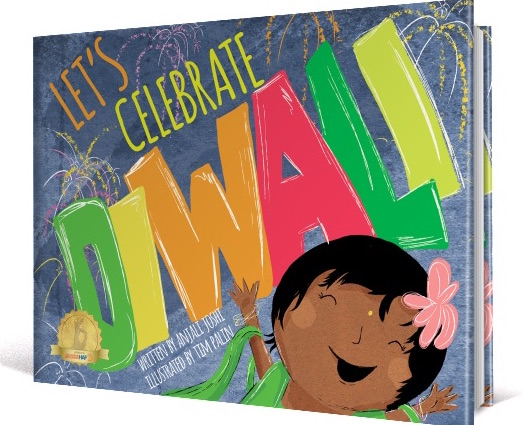
Let’s Celebrate Diwali

letscelebratediwali

Image Credit: Bharat Babies (Mascot Books), Anjali Joshi/Tim Palin


It’s almost Diwali, the festival of lights, so why not celebrate with this cool picture book!? 🙂

Let’s Celebrate Diwali tells the story of Harini and her friends. These four friends are in the same classroom and on Diwali, they share their Diwali stories. Harini is Hindu, Dhimen is Buddhist, Urvi is Jain and Amrit is Sikh. Dressed in traditional outfits, they take turns telling how they celebrate the holiday and readers learn how rich Diwali is. It’s important that their teacher, Ms. Lo, gives her students the ability to share their cultures and religions during circle time. Her classroom is a safe and welcoming space for all religions and cultures which is something children need to see and experience.

Harini and Urvi learn that they both light diyas for Diwali but the stories their families tell are different. This book does a great job of highlighting cultural diversity and respect; all the students in the classroom are engaged during circle time and ask great questions. At the end of the story, Anna, who does not celebrate Diwali, wishes for a special Diwali outfit too and Harini lets her wear her dupatta (scarf) and bangles. Harini races home and can’t wait to share the new Diwali stories she learned at school. Maybe readers will be inspired to learn more about the stories featured in this book!

I love the addition of a pronunciation guide + definitions of the vocabulary in the text. Anjali Joshi’s cute and relatable story is one that children will connect to and learn a lot from. I enjoyed Tim Palin’s vibrant and happy illustrations. I especially like the design of the cover; the bright, blocky letters mimic the bright lights and exciting fireworks of Diwali. The round faces of the children in the book are warm and inviting.

Here is a cute Paper Diya craft from blogger Artsy Craftsy Mom that pairs well with this book.  Just like Harani and Urvi, you’ll have diyas in your home this Diwali.


Happy Diwali! ❤


Recommended for: All Ages
Great for: Holidays, Cultural Relativity, Cultural Diversity, India, Diwali, Friendship, Community, School Life, Family, Respect, Religion, Celebration
Book Info: Let’s Celebrate Diwali by Anjali Joshi/Illustrated by Tim Palin, 2016 Bharat Babies (Mascot Books), ISBN: 9781631774218

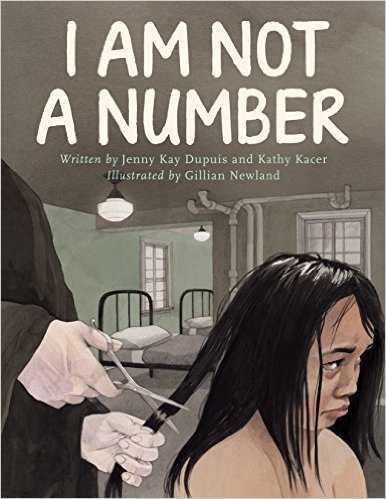
I Am Not a Number

iamnotanumber

Image Credit: Second Story Press, Jenny Kay Dupuis & Kathy Kacer/Gillian Newland

“Meta” picture books have their place, cute bunnies, princesses and dragons in picture books have their place too. But there’s no denying the power of a non-fiction narrative to teach. I Am Not a Number teaches about an often overlooked and ignored part of the history of Native peoples in the Americas; the history of boarding/residential schools and the pain associated with settler colonialism.

In I Am Not a Number, Anishinaabe/Ojibway (Nipissing First Nation) author and educator Dr. Jenny Kay Dupuis shares her grandmother’s story. With the help of author Kathy Kacer, Dupuis takes a tough and emotional subject and creates a learning tool. This book can also help First Nations children and families with healing and bringing forward stories of trauma. The emotional control and abuse afflicted upon children by Christian missionaries and the government has had lasting effects on First Nations communities. Some of the more well known examples of detrimental residential boarding school systems are in Australia, Canada and the United States. Here in the United States, Capt. Richard H. Pratt, founder of the Carlisle School, said that instead of killing “The Indian” one must “kill the Indian in him, and save the man.” Generations of Indigenous people around the world have suffered emotional trauma under states determined to “civilize” them.

iamnotanumber2

Image Credit: Second Story Press, Jenny Kay Dupuis & Kathy Kacer/Gillian Newland


I Am Not a Number begins on the Nipissing Reserve Number 10 in Ontario, Canada and follows young Irene as she’s forced to leave her home with two of her bothers. The Indian agent represents the law and Irene’s parents must send their children to residential school with him. Irene doesn’t know what awaits her but holds her mother’s words “Never forget who you are!” close. As the title of the book suggests, the children are stripped of the basic right of a name at the school; numbers are what the nuns refer to them by. They’re also beaten (and worse) for speaking their language. I Am Not a Number does not shy away from the gritty details of abuse in residential schools. This transparency is necessary for telling these stories. When summer finally comes, Irene and her brothers are allowed to go home for a while and the familiarity of their food, land and family are like a balm. Even speaking her language feel strange, though, and she suffers nightmares. Irene’s parents make the decision to fight to keep their children, no matter the consequences!

I’m glad for the back ground information at the end of the book about Canadian residential schools and especially Jenny Kay Dupuis’ afterword about her grandmother, Irene Couchie Dupuis. In addition to powerful storytelling, this book has moving and beautiful illustrations. Using a palette of grays, browns and greens, Gillian Newland brings Irene’s experience (and strength) to life for the reader. The images in this book don’t directly portray physical abuse but they show the aftermath in fearful, stunned and pained expressions. She also does a great job of portraying love; my favorite spread is of Irene and her father, forehead to forehead, eyes locked and comforting. Relieved to be reunited.

This is an important book that I hope you’ll take the time to experience with your children. Children’s non-fiction picture books are powerful and necessary for teaching history, empathy and respect. Thanks for sharing your grandmother’s story, Jenny Kay Dupuis!


Recommended for: 2nd Grade and up
Great for: Strength, Friendship, Indigenous Peoples, Boarding Schools, Family, Love, Resilience, Determination, Community, Canadian History, Colonialism, Emotional Trauma, Religion, Social Justice, Social Issues
Book Info: I Am Not a Number by Jenny Kay Dupuis and Kathy Kacer/Illustrated by Gillian Newland, 2016 Second Story Press, ISBN: 9781927583944

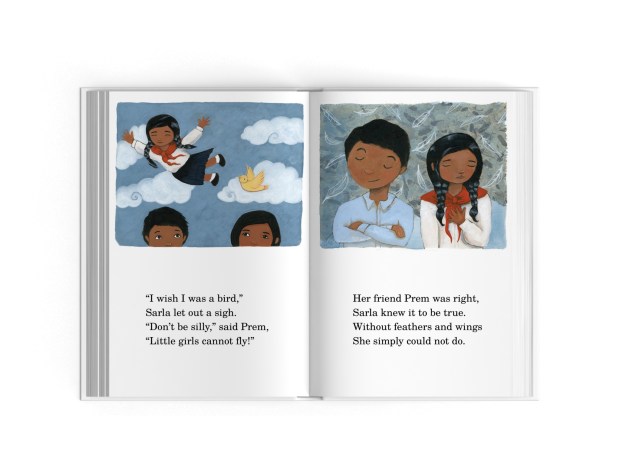
Sarla in the Sky

sarla-in-the-sky

Image Credit: Bharat Babies (Mascot Books), Anjali Joshi/Lisa Kurt

In the United States, Amelia Earhart is considered an inspiration and hero. The first African American female pilot, Bessie Coleman, isn’t very well known and until I read this book, I didn’t know about Sarla Thakral, India’s first female pilot. This simple and pretty beginning reader will teach readers of all ages about her and will perhaps inspire them to learn more.

In this story inspired by Sarla Thakral’s life and accomplishments, Sarla dreams of flying like the birds. When she’s a little girl, her best friend Prem reminds her that girls cannot fly but she’s inspired by a caterpillar to make her dreams a reality. As she grows up, she’s persistent despite the discouragement of others. She tells her critics that wings are not just for boys and continues on her path to the sky. Sarla finally gets her pilot’s license at age 21 and becomes India’s first female pilot. Like the caterpillar from her childhood, she grows into a courageous butterfly.

sarla2

Image Credit: Bharat Babies (Mascot Books), Anjali Joshi/Lisa Kurt

I enjoyed this story but it would’ve been just as good if not better if written in prose, not verse. There were some rhyming lines that didn’t quite work. That being said, I can see children enjoying this book as a read aloud. Lisa Kurt’s paintings are very pretty and I love the scene where Sarla day-dreams in the tall grass. I also liked discovering little details in her art like the use of a map of India for the butterfly’s wings.

It’s not often we get quality stories, especially in picture book or beginning reader format, that discuss Indian girls and women. This book is also important because it’s about a girl who loves science and mathematics. Sarla in the Sky is a great addition to any collection and I hope it inspires children, especially little Indian girls and boys, to dream big and fly high.

Click here to learn more about Sarla Thakral!


Recommended for: 1st-2nd Grade and up
Great for: Aviation, Dreams, Determination, India, History, History Inspired, Girls In STEM, Girl Power, Inner Strength, Diversity, Inspiration, Beginning Reader, Rhyme
Book Info: Sarla in the Sky by Anjali Joshi/Illustrated by Lisa Kurt, 2016 Bharat Babies (Mascot Books), ISBN: 9781631777462


Celebrating Our Grandmothers

print_cover_fishing_sized_eng

Image Credit: Inhabit Media Inc., Susan Avingaq & Maren Vsetula/Charlene Chua
dontcallmegrandma

Image Credit: Carolrhoda Books (Lerner Publishing Group), Vaunda Micheaux Nelson/ Elizabeth Zunon

Today I’m doing a double review of two excellent books that explore relationships with grandmothers. Fishing with Grandma and Don’t Call Me Grandma are very different stories that feature loving and powerful grandmothers.

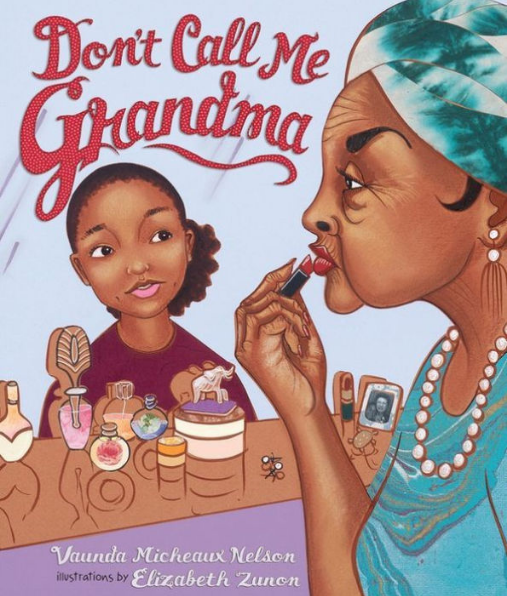
Don’t Call Me Grandma wasn’t what I expected it to be. From reading the title alone, I assumed it would be about a grandmother who doesn’t want to be reminded of her age but that’s not what it’s about at all! Vaunda Micheaux Nelson writes really great books by the way; I’ve already reviewed The Book Itch and Bad News for Outlaws. This book tells the story of a little girl and her relationship with her glamorous Great-Grandmother Nell. Great-Grandmother Nell has a strong personality; she’s very prickly but is also loving (in her own way). Nell’s great-granddaughter is slightly scared of her but because she knows how special she is, she works hard to get close to her.

I really enjoyed the flashbacks scenes in this book because they tell us more about Great-Grandmother Nell. The scene about Nell’s first heart-break is very moving, though it’s not the kind of heart-break you might expect. Great-Grandmother Nell is ninety six  years old and has lived through the civil rights movement and more. I’m glad to see this story discuss race and being a Colored girl (and later a Colored woman) in the United States.
dont-call-me-grandma2

Image Credit: Carolrhoda Books (Lerner Publishing Group), Vaunda Micheaux Nelson/Elizabeth Zunon

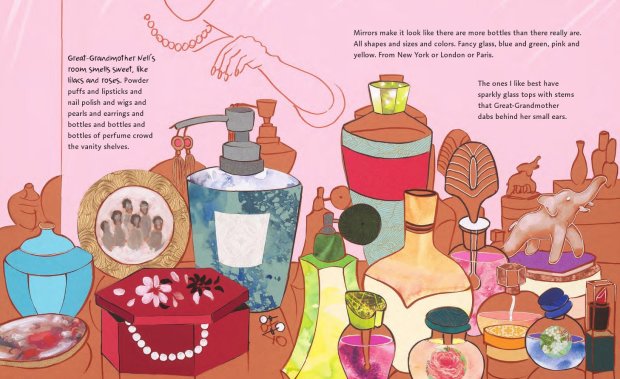
Elizabeth Zunon’s illustrations are beautiful. Her style is a mix of watercolor, pen, markers, collage and pencil. Great-granddaughter favors Great-Grandmother and Great-Grandmother’s warm brown face is full of rich lines and wrinkles. All the beautiful perfume bottles on her vanity and the scene where she teaches her great-granddaughter how to blot her lipstick reminds me of my grandmother. For the flashback scenes, Zunon uses blotchy watercolors that give the feeling of hazy memory. Check out this behind the scenes blog post about how Zunon created the illustrations!

Great-Grandmother Nell is a strong grandmother and so is Anaanatsiaq (grandmother) in Fishing with Grandma. She drives an ATV and is always down for an adventure! In the story, a little boy and girl are excited to visit their favorite elder. Their visit starts with string games and fresh bannock from the oven but the children are eager for a little more adventure. They decide to go jigging for fish on the ice and Anaanatsiaq shows them how to dress for the cold. She also shows them to how to check the ice for thickness (safety first) and how to use traditional tools!

One of my favorite things about this book is that it’s full of Inuktitut words and describes Inuit fishing tools. Children can learn a bit of another language while enjoying a story about a loving indigenous family. Another plus is that the story is co-written by Inuit elder Susan Avingaq…so it’s a story about indigenous peoples written by an indigenous woman for children all over the world. This is the power of #ownvoices.

After the family has a successful day of fishing, Anaanatsiaq explains that the extra fish they caught will go to elders who can’t make it out to the lake. It’s important to give and think of others and also important to learn traditional skills, she says. These are good lessons for children all over the world to take away.

fishing-with-grandma2

Image Credit: Inhabit Media Inc., Susan Avingaq & Maren Vsetula/Charlene Chua

Charlene Chua’s digital illustrations are so clean and vibrant. I love how she brings their community to life and I especially like the spreads on the blue ice and underwater with the beautiful Arctic char. I like how she uses streaks of color to fill space; it creates a pretty effect. Her characters have such bright expressions and rosy cheeks! Annanatsiaq is loving and protective of her curious grandchildren; her happy face shows a lot of pride. They’re adventurers just like her!

I hope your family will take time to enjoy these two stories about grandmothers. Maybe you can even read them with your grandmothers!

Recommended for: All Ages
Great for: Family, Grandmothers, Relationships, Teamwork, Ice Fishing, Siblings, Love, Indigenous Peoples, Community, Diversity, Strong Women
Book Info: Fishing with Grandma by Susan Avingaq & Maren Vsetula/Illustrated by Charlene Chua, 2016 Inhabit Media Inc., ISBN: 9781772270846

Recommended for: All Ages
Great for: Family, Grandmothers, Racism, History, Relationships, African American, Strong Women, Patience, Understanding
Book Info: Don’t Call Me Grandma by Vaunda Micheaux Nelson/Illustrated by Elizabeth Zunon, 2016 Carolrhoda Books (Lerner Publishing Group), ISBN: 9781467742085

Self Affirmation. Black Books. Black Lives

A friend of mine wrote a post on his Facebook about being tired of feeling like he has to put on a smile while black men, men who look like him and his brothers, are being killed. This “performance” is exhausting. Most people of color know it well; we put it on in mostly white spaces. We put it on even if we’re grieving, even if we’re exhausted, even if we’re scared for our lives.

It’s a kind of desensitization yet hyper-sensitivity. It’s also depression. I know I’ve felt it. It’s most acute the moment we hear another black person has been killed by the hands of law enforcement for little to no reason. Another reason to believe that our lives really don’t matter and that this system is not built to protect us. Not long ago we were chattel. Black parents continually worry about not only their own lives but the lives of their children; white parents don’t have to worry about their children getting gunned down by police for the color of their skin and perceived aggressiveness.

While existing in this space as an educator, as a lover of books and as a black woman, I occasionally think thoughts like “Well who gives a fuck about diverse books when there are black bodies in the streets?? Is it really that important?”

It is. Self affirmation is strength and books have power. To escape this world & get lost in a book (even if only for a few minutes) can be a form of healing for families of color. Seeing a kid in a book that looks like you is empowering. That’s what we need, more empowered kids of color.

Representation matters now more than ever.

Picture This: Reflecting Diversity in Children’s Book Publishing

Check it out. Lots of work went into this & lots of work to be done. Animals and Trucks see themselves in books more than kids of color…

Real life isn’t a Disney Movie.

Sarah Park Dahlen's avatar박사라 Sarah Park Dahlen, Ph.D.

At the 2016 ALA Annual Conference, author Tameka Fryer Brown presented the Cooperative Children’s Book Center’s (CCBC) multicultural publishing statistics during the panel “Celebrating Diversity: The Brown Bookshelf Salutes Great Books for Kids.” She displayed Tina Kügler’s oft-cited 2012 infographic, with the comment that even though the numbers are now 4 years old, the image communicated inequity in publishing so well that she would use it at every opportunity.

Just before ALA Annual, St. Catherine University MLIS Program assistant professor Sarah Park Dahlen had posted to Facebook asking if anyone knew of an updated illustration, but Kügler’s was the only one anyone knew about. Friends said they would be happy to support an illustrator to create an update. Author/teacher Molly Beth Griffin saw Sarah’s post and queried her Twin Cities Picture Book Salon to see if anyone would be interested; David Huyck (pronounced “hike”) responded, and a…

View original post 287 more words

City Shapes

CityShapes

Image Credit: Little, Brown and Company (Hachette Book Group), Diana Murray/Bryan Collier

I first saw this book cover online many, many months before it published and I couldn’t forget it. How could I?? Her smiling brown face is full of joy and wonder. Now I finally have my own copy of this book and it is a delight.

Summer is starting to wind down and like the little girl in this book, kids are holding onto the last bits of fun before they head back to school. City kids will really relate to City Shapes; it celebrates the beauty of city-living and also teaches shapes! In the story, a mama pigeon and an imaginative girl spend the day exploring their city. The dynamic spreads and gorgeous rhyming sentences teach children about shapes found in the city. Children will enjoy reading Murray’s rhymes and searching for shapes in the illustrations. Maybe they’ll even be inspired to search for shapes in their own home.

This book sounds beautiful read aloud. I hope families, teachers and librarians are reading it to their children. Murray’s flowing words are enhanced by Collier’s colorful and dreamy art. Collier’s signature watercolor and collage art has so many layers for children to explore; he truly brings the city to life. I especially love that the girl in the book is his daughter! In a time when we need many more excellent books staring black children, I’m so happy to have this one to love and recommend.

What a lovely book! With every read you’ll find something new to enjoy. ❤


P.S. Towards the end of the book, look for the tiny photograph of Collier’s daughter! 😀


Recommended for: All Ages
Great for: Imagination, Discovery, City Life, Creativity, Shapes, Animals, Friendship, Read-Aloud, Diversity, African American, Black Girl Magic
Book Info: City Shapes by Diana Murray/Illustrated by Bryan Collier, 2016 Little, Brown and Company (Hachette Book Group), ISBN: 9780316370929


What Do You See?

WhatDoYouSee?

Image Credit: Home Grown Books, Kyla Ryman/Wangechi Mutu

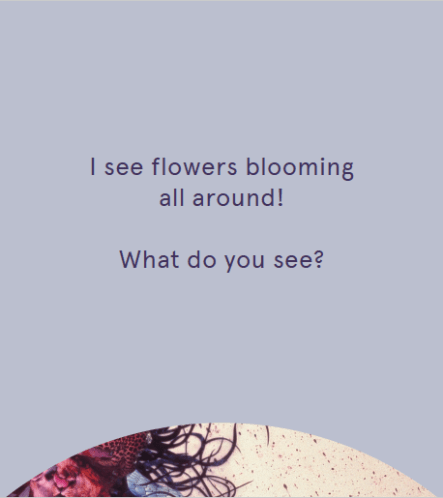
African contemporary artist Wangechi Mutu’s art hangs in galleries around the world and now little ones can experience her vivid and surreal art through this board book.

What I like about What Do You See? is that it’s a “seek & find” book and an introduction to contemporary art. There are many books that introduce children to art/artists but what stands out about this one is the energy of Mutu’s work and the clean design of the book. Each page has very simple text; a line that suggests what can be found in the art and a question to spark imagination. Giving a child something to find and also encouraging discussion about what they see is important for development.

WhatDoYouSee2

WhatDoYouSee3

Image Credit: Home Grown Books, Kyla Ryman/Wangechi Mutu

Each page highlights one section of Mutu’s piece, Le Noble Savage and the final page shows a more complete piece section of the artwork. Is it a woman? A creature stretching elegantly and powerfully? She mixes ink with collage; warm reds, purples and pinks burst on the pages. Because her art is so detailed, there’s much to discover. The format of the book is portrait instead of landscape, which works well for showcasing her art. Another excellent thing about this book is that a portion of sales go to Every Mother Counts. How great is that! 😀

It’s always a pleasure to see see black female illustrators thrive but it’s quite special to see a black female contemporary artist’s work made into a children’s book. Maybe this book will inspire families to check out Wangechi Mutu’s art in person!

Recommended for: Toddlers to Early Elementary
Great for: Imagination, Art, Contemporary Art, Seek & Find, Discussion, Diversity, Women, African Artists, Inspiration, Early Childhood Development
Book Info: What Do You See? written by Kyla Ryman/Featuring the artwork of Wangechi Mutu, 2016 Home Grown Books, ISBN: 9780997058703

A Piece of Home

APieceofHOme copy

Image Credit: Candlewick Press, Jeri Watts/Hyewon Yum

Creating a new ordinary.

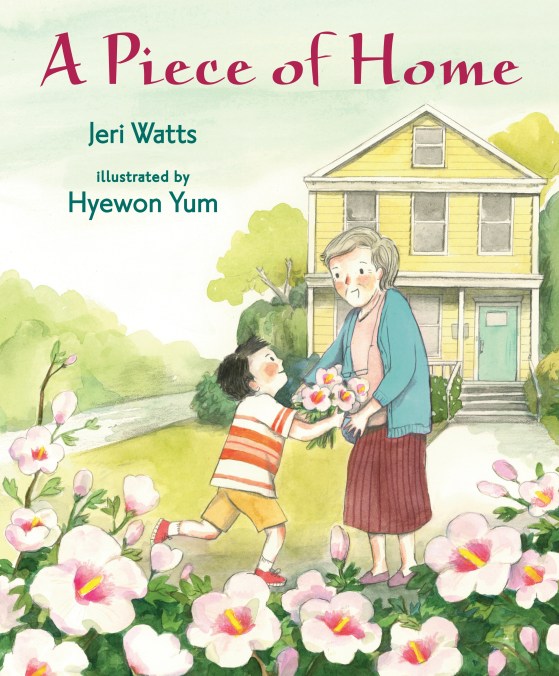
Not everyone wants to stand out, especially if your family moves to a new country and you suddenly feel different from everyone else. Hee Jun is a self proclaimed “ordinary” Korean boy and his grandmother is a highly respected teacher in Korea…until Hee Jun’s father gets a job in West Virginia and everything changes. Hee Jun’s family goes through a roller coaster of emotions until they find comfort and familiarity in their new lives.

Jeri Watts does a great job of depicting Korean culture and children’s emotions during times of change. This story was inspired by a Korean student who desperately wanted her to understand him and felt out of place in his new home of Virginia. As great as her storytelling is, the book wouldn’t be what it is without Hyewon Yum’s authentic voice coming through in the art. From the first page, I felt like I was back on the side streets surrounding my 초등학교 (elementary school). My school had a 떡볶이 (spicy rice cake) shop across the street just like the high school Hee Jun’s grandmother teaches at. I love how Yum incorporates Korean words and sentences into the illustrations. Her art is evocative and she’s great at characterization and creating story.

APieceofHome2

Image Credit: Candlewick Press, Jeri Watts/Hyewon Yum

I really connected to this book because (as you can probably guess) I used to live in Korea. I graduated from college and almost immediately flew over to start a new life as an English teacher. Similar to Hee Jun, I felt out of control and confused at times. He also reminds me of my students, especially the ones who wanted to get to know me but didn’t have confidence in their ability to communicate with me. I made them feel uncomfortable in their own space, which must’ve been nerve-wracking! The world caters to native English speakers but Native English speaking countries rarely cater to non-native English speakers! >_< Like Hee Jun’s grandmother, immigrants bring richness into the United States that shouldn’t be ignored just because they struggle with English.

The other day I snapped this photo of 무궁화 (Mugungwha/Rose of Sharon) growing near my house. It made me think of my city of 대구 and my friends and students there.
Mugunghwa

I hope you enjoy A Piece of Home as much as I did. I think a lot of children will be able to relate to it!


Recommended for: All Ages
Great for: Family, Community, Immigration, Friendship, Korea, Korean Culture, Inner Strength, Difference, School Life, Diversity, Discussion, Language, Confidence
Book Info: A Piece of Home by Jeri Watts/Illustrated by Hyewon Yum, 2016 Candlewick Press, ISBN: 9780763669713