Talkin’ About Bessie: The Story of Aviator Elizabeth Coleman

TalkinAboutBessie

Image Credit: Orchard Books (Scholastic Inc.), Nikki Grimes/E.B. Lewis

“…Bessie made me believe I could be anything.” – Young Fan

I’ve been wanting to review a book about Bessie Coleman for quite a while. I found two contenders and ultimately I chose this one over Fly High! The Story of Bessie Coleman. Though that book is also good, Talkin’ About Bessie: The Story of Aviator Elizabeth Coleman is a stronger book in execution, creativity and memorability. It has more heart and that’s exactly what Bessie was about. I recommend Fly High! The Story of Bessie Coleman for younger readers.

Talkin’ About Bessie has a unique concept; 20 family members, acquaintances and friends come together after Bessie Coleman’s funeral to speak about her. Instead of a straightforward non-fiction narrative style, we get something special; reflection based on fact, crafted by author, Nikki Grimes.

Bessie grew up poor in segregated Texas, picking cotton with her many siblings. She loved numbers and words from an early age and her mom always encouraged her to read the bible. Though her father left their family  when she was young (which left her little time for childhood), she kept dreaming. When an adult, she moved to Chicago and after taking many jobs found inspiration from the blacks who ran the newspaper The Defender. She decided to go to France and get her pilots license and when she set her mind on that goal, she was determined to follow through! Bessie Coleman became the first person of African descent in the US to get an international pilot’s license and came back to the US to became an aviatrix. She wanted to encourage blacks to fly and worked towards raising funds to open a flight school for her people. Her personality was bigger than life and she was (and still is) an inspiration.

Nikki Grimes’ writing is great. The characters’ various speaking styles bring them to life. Each page has a “photo painting” in the corner  with the name of the person speaking and a gorgeous full page illustration. This is a nice design. One aspect of the book that didn’t make sense to me though was the character “Laundry Customer.” She’s a white character who employed young Bessie and her family (created by Grimes). Her words are very privileged and she makes it clear that Bessie was, from an early age, challenging and out of line for a young Negro girl. So why would she be present at Bessie’s funeral?? Though I understand the author’s desire to help us understand the segregated world Bessie lived in, it seems out of place and the other characters do a fine job of creating context for readers.

E.B. Lewis’ art is absolutely beautiful. This kind of story requires a very straightforward type of illustration that serves to compliment/enhance the words. His watercolors are meticulous and he does a great job of creating place, mood and character. I hope you’ll take the time to read this excellent book that honors Bessie Coleman’s spirit!


P.S. Here’s some backstory from the author Nikki Grimes! Part 1 here and Part 2 here.


Recommended for: 2nd Grade and up
Great for: Womens History Month, History, Black History, African-American, Diversity, Black Girl Magic, Black Girls Rock, Aviation, Determination, Confidence, Inner Strength, Family, Relationships, Struggles, Segregation, Racism, Sexism, Tragedy, Role Model, Dreams, Biography, Non-Fiction
Book Info: Talkin’ About Bessie: The Story of aviator Elizabeth Coleman by Nikki Grimes/Illustrated by E.B. Lewis, 2002 Orchard Books (Scholastic Inc.), ISBN: 9780439352437

Mini Myths: Be Patient, Pandora!

BePatientPandora

Image Credit: Abrams Appleseed, Joan Holub/Leslie Patricelli

Oh I love clever books. Greek Mythology for babies and toddlers? Okay! Be Patient, Pandora! is my favorite in the Mini Myth Series though Don’t Get Lost, Odysseus just came out…

This series is inspired by classic Greek myths and each book teaches a simple but important lesson. In this one, Pandora just…can’t…stop herself from touching her mom’s big green box. Will her curiosity get the better of her? One little touch can’t hurt right? The words and sentences are very simple and to the point; perfect for toddlers and early readers. Holub uses several great verbs like leaning, sitting and bouncing and skillfully crafts a story with just a few key sentences.

Patricelli’s art work is, as usual, dynamic. She lays the bright acrylics down heavily and really knows how to use color. Little ones will love the illustrations. Pandora is so cute and naughty; she has the best expressions. [Spoiler Alert] I’m so glad that in this version Pandora’s box doesn’t open to reveal all the troubles of the world! What a relief. >_<


Recommended for: Babies, Toddlers, Early Readers
Great for: Humor, Lessons, Patience, Love, Family, Mythology, Vocabulary, Read Aloud, Clever
Book Info: Mini Myths: Be Patient, Pandora! by Joan Holub/Illustrated by Leslie Patricelli, 2014 Abrams Appleseed, ISBN: 9781419709517

The Quickest Kid in Clarksville

TheQuickestKid

Image Credit: Chronicle Books, Pat Zietlow Miller/Frank Morrison

Sometimes it’s better to be friends than rivals, especially when you’re working towards the same goal!

In The Quickest Kid in Clarksville, Alta’s role model is the amazing sprinter Wilma Rudolph. The story takes place in 1960 when everyone in Clarksville, Tennessee is preparing for the big parade to celebrate Wilma’s 3 Gold Medals at the Rome Olympics. Wilma is the fastest woman in the world and Alta is the fastest kid in Clarksville. She’s confident in her feet. Problem is there’s a new girl named Charmaine who’s just as confident in her speed and struts around like she rules the block! It doesn’t help that she has shiny new sneakers while Alta’s are worn down. Nevertheless, Alta challenges her to a race!  On parade day, Alta and her friends struggle to get their bulky banner to the parade site and reluctantly accept Charmaine’s help. Relay-style (just like Wilma and her team) they arrive at the parade to celebrate their champion! Representation really matters and I can’t imagine how much Wilma meant to young black girls in the 60s (and now!).

TheQuickestKid2

Image Credit: Chronicle Books, Pat Zietlow Miller/Frank Morrison

I enjoyed the writing of this book; there’s a nice rhythm and just the right amount of sass and confidence. Morrison’s beautiful watercolor illustrations pair perfectly with the words. Just take a look at the cover! Alta knows exactly who she is! Throughout the story, we see determination, confidence, worry, shame and happiness on her face and in her body language. My favorite spread is when she’s ready to run, banner in hand with furrowed brows, chanting “Wil-ma Ru-dolph. Wil-ma Ru-dolph” in her head to boost her heart and her feet.

Just gorgeous!

P.S. Check out author Pat Zietlow Miller’s awesome Nerdy Book Club post about the process of making this book/finding the right story. Also check out this great photo of Wilma with her parents during the parade! ❤


Recommended for: All ages
Great for: Determination, Confidence, Friendship, Rivals, Relationships, Teamwork, Sports, Track and Field, Black Girl Magic, African American, Diversity, History, Segregation, Clarksville TN, Wilma Rudolph, Rhythm, Read-Aloud
Book Info: The Quickest Kid in Clarksville by Pat Zietlow Miller/Illustrated by Frank Morrison, 2015 Chronicle Books, ISBN: 9781452129365

Ragweed’s Farm Dog Handbook

RagweedFarmdog

Image Credit: Candlewick Press, Anne Vittur Kennedy

This is, hands down, one of the funniest picture books of 2015! Love it. It makes me miss my crazy Ibizan hound Loki and his shenanigans…

In Ragweed’s Farm Dog Handbook, Ragweed is a confident little fellow. He wrote a handbook so that other dogs can follow his lead on how to be the best farm dog ever. Ragweed tells us all the things that are not a farm dog’s job BUT…if a farm dog were to do them, there might be biscuits involved. He really shouldn’t wake the farmer but…if he does he’ll get a biscuit to go away! He knows EXACTLY what he’s doing. The writing of this book is very formulaic and funny and kids will be able to follow along easily. There’ll be lots of laughs and maybe a few “ewwws” too? 😉

Anne Vittur Kennedy’s beautiful acrylic paintings really create the spirit of farm life and Ragweed is so adorable! That little scoundrel with his huge eyes, scraggly hair and long snout is sure to win your heart. He also has great expressions and the animals do too (they know to keep an eye on him!). Hope you enjoy this one as much as I did!


Recommended for: All ages
Great for: Humor, Animals, Dogs, Relationships, Farm Life, Love, Read-Aloud
Book Info: Ragweed’s Farm Dog Handbook by Anne Vittur Kennedy, 2015 Candlewick Press, ISBN: 9780763674175

Happy to Be Nappy

HappytobeNappy

Image Credit: Jump at the Sun (Hyperion Books for Children), bell hooks/Chris Raschka

If I could ask any illustrator to draw my portrait, I’d choose Chris Raschka because I see myself in his illustrations.

Sitting still in a chair while mom, aunt or grandma cornrows/straightens/combs/dries our hair is something many black women grow up experiencing. One of my best memories is when my dad would sit me in front of him and speed dry my dreads with a towel, making me laugh. Hair care is a past-time, talking time, learning time and…waiting time. Oh sometimes it takes so long. >_<

“Nappy” is a term that means “unkempt” or “messy” or generally “rough” in black-hair-speak. If someone says your hair is nappy, it’s not a nice thing to say. Black women have a long history of resisting (or accepting) western hair norms but we’re always creative. We embrace our natural curls, we straighten, we twist, we curl, we weave, we grow afros. Black hair culture is fascinating.

HappyToBeNappy2

Image Credit: Jump at the Sun (Hyperion Books for Children), bell hooks/Chris Raschka

Happy to Be Nappy is bell hook’s book for little black girls and their hair. It’s about loving your hair in every capacity. Sometimes it’s frizzy, sometimes it’s neatly braided, sometimes it’s flat but it’s always a crown. This book celebrates being happy with the way you look and proud of the way you feel and pairs excellently with I Like Myself!  Any child can relate to the happiness and confidence exhibited by the girls in this book.

Chris Raschka’s art is perfect. His watercolor and bold black lines bring Happy to be Nappy to life. The pages are filled with blotchy colors, wide and thin strokes and swoops of black piled on top of brown faces with simple, beautiful expressions. Raschka really lets the watercolor soak into the paper and the results are gorgeous. ❤

I’m so nappy happy I discovered this book and I hope you’ll seek it out to enjoy too! 🙂


Recommended for: All ages
Great for: Hair, Black Hair, Girl Power, Happy, Empowerment, Family, Relationships, Pride, Black Girls Rock, Black Girl Magic, Confidence, Self Esteem, Diversity, Read-Aloud, Rhyme
Book Info: Happy to be Nappy  by bell hooks/Illustrated by Chris Raschka, 1999 Jump at the Sun (Hyperion Books for Children), ISBN: 9780786804276


Alphablock

Alphablock

Image Credit: Abrams Appleseed (Abrams), Christopher Franceschelli/Peskimo

Quality design is important. Eye-catching graphics and clever construction can set a book apart from the rest.

Alphablock is a dynamic board book. Along with Take Away the A, this is one of my favorite ABC books. With its chunky build and interactive pages, it’s perfect for learning and discovering! The first page gets right down to it, flip the letter A and you’ll learn that A is for…Apple. The A blends into the page before it and we’re presented with a scene (a picnic).

Alphablock2

Image Credit: Abrams Appleseed (Abrams), Christopher Franceschelli/Peskimo

Alphablock is great for storytelling. What’s going on? Why do you think they’re having a picnic? What other fruits are on the page and so on. Parents and teachers can use this book in many ways to work on reading, vocabulary and word-picture association. Peskimo’s digital illustrations are bold and fabulous. Hope you’ll pick up this one and explore the alphabet.


Recommended for: Babies, Toddlers, Early Readers
Great for: ABC, Early Childhood Development, Word Picture Association, Interactive, Animals, Foods, Vocabulary, Early Learning, Discussion
Book Info: Alphablock by Christopher Franceschelli/Illustrated by Peskimo, 2013 Abrams Appleseed (Abrams), ISBN: 9781419709364

Look What Brown Can Do!

LookWhatBrownCanDo

Image Credit: Sweetberry Books, T. Marie Harris/Neda Ivanova

I don’t know about you but I’m very aware of the fact that I come from greatness. Though I can’t tell you much about my ancestors, I DO know that they lived and loved and are the reason why I’m here today.

The excellent thing about Look What Brown Can Do! is that it’s about empowerment, specifically black empowerment. For a young black child, reading this book can cloak them in a blanket of comfort, pride…and inspiration! For other children, it’s a great book about black history/accomplishments that can inspire them too. The book is sectioned into art, music, business, science and more. T. Marie Harris writes an encouraging sentence about what brown can do and then we see photographs and descriptions of three important black heroes. In many ways, this book is a simpler version of the Empak Black History Series and is more “young kid friendly” because of the fun illustrations.

LookWhatBrownCanDo2

Image Credit: Sweetberry Books, T. Marie Harris/Neda Ivanova

Neda Ivanova’s digital illustrations are cute. It’s beautiful to see little brown children dream of being scientists, doctors, athletes, artists and government officials. I was especially drawn to the cover! I happened to see it online one day and thought to myself, “Oh that looks interesting!” I love the different shades of brown hands and arms busy creating and dreaming together.

This book is the first in Harris’ upcoming ‘Black Like Me’ series which will feature stories that celebrate blackness and everyday life. She writes that sometimes it’s nice to read a fun story with your children that has black characters but doesn’t necessarily focus on race. I SO agree. Though there’s always a need for those books, it’s refreshing to read about kids of color…just being kids! I’m pleased to know and share this book. Please check out Look What Brown Can Do!

P.S. You can check out T. Marie Harris’ website at http://www.lookwhatbrowncando.com and follow her on Twitter at @T_MarieHaris.


Recommended for: All ages
Great for: History, Black History, Black Excellence, Encouragement, Inspiration, Leaders, Occupations, Dreams, Read-Aloud, Science, STEM, Government, Arts, Sports, Medicine, Business, Beg. Reader, Community
Book Info: Look What Brown Can Do! by T. Marie Harris/Illustrated by Neda Ivanova, 2016 Sweetberry Books, ISBN: 9780692483862

Harry Potter and the Goblet of NOPE!

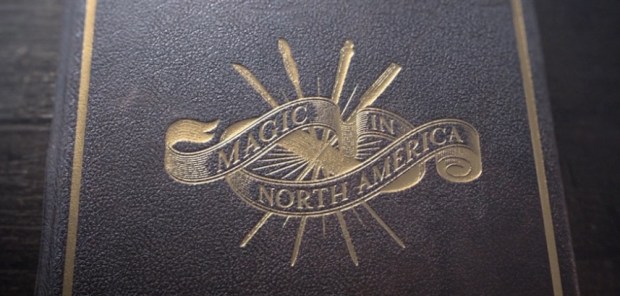
magicinNA copy

Image Credit: Pottermore/Warner Brothers

HARRY POTTER AND THE GOBLET of NOPE!

Dear JK Rowling,

Alia here.

There’s no denying you’re one of the most brilliant minds of our era. You’ve created worlds that we get lost in and complex characters that we love dearly. But with MAGIC IN NORTH AMERICA, something went wrong.

Maybe it’s that you’re not from North America? But surely you did your research into the complexities that are the native peoples of this continent…Maybe it’s that you didn’t grow up constantly bombarded by stereotypical images of native people on TV, in movies, as Halloween costumes, etc.? Maybe it’s because you didn’t go to school here and didn’t receive an incomplete history of native peoples that basically stops after “First Contact” & “Thanksgiving” and ignores modern native people? Perhaps…

There are real issues here. You’re dealing with real people, cultures, traditions and religions and with that comes a lot of responsibility. Native people are already heavily stereotyped around the world as “Magical Beings” and now…they’re in your magical canon! Not only do you refer to them as a monolithic group (there are hundreds of nations in the US alone), you *seem* to imply that native wand-less magic is powerful but not as refined as European magic (due to the power of a wand).

I encourage you, Ms. Rowling, to respond to native academics, fans, etc. who are asking you tough, but important questions. Debbie Reese, Dr. Adrienne Keene and many others have tweeted at you. Herehere & here are some EXCELLENT articles that delve into your work from a native perspective. This one is excellent as well. I ask you to check out Debbie Reese and Dr. Adrienne Keene’s websites in general. Just look around. They do great work.

Let’s get this discussion going and please let us know who you consulted for this project because we’re SUPER CURIOUS. (at least I am…)

Representation Matters.

It really does and yes, anyone CAN write a story, but I’d hope they LISTEN and learn as much as possible before releasing it to the world, especially when you’re dealing with living people, religions, and NATIVE KIDS. There’s a long history of misrepresentation, exploitation and stereotyping of native peoples.

MAGIC IN NORTH AMERICA is problematic and we await your response…

Sincerely,

A Fan

**SIPS TEA (out of the Goblet of Fire)**

When Marian Sang

WhenMarianSang

Image Credit: Scholastic Press, Pam Muñoz Ryan/Brian Selznick

Take a look at that cover!

Not only is the cover beautiful, well designed and eye-catching, the entire book is gorgeous.

The story begins with young Marian in her house, set in the middle of a grand stage. When Marian Sang is a moving and beautifully told story of the life of singer Marian Anderson. There was never a moment she didn’t love to sing and people loved to listen. She was passionate about her faith and her music and by the age of eight, was performing for choruses in Philadelphia. Early on, Marian decided that music was something she wanted to dedicate herself to but because of her race, she was turned away from formal lessons.

Prejudice is intertwined with Marian’s story. Even though she was invited to sing across the country, she couldn’t even get a hotel room! But she continued to rise and share the gift of her voice with the world. Like Josephine Baker, she came back to the US and faced the challenge of performing as a black woman. The D.A.R. might’ve denied her performance at their hall but little did they know Marian’s spirit was destined for greatness. Eleanor Roosevelt and President Roosevelt set her up to perform at the Lincoln Memorial instead!! That performance was groundbreaking and memorable not only for the integrated crowd that witnessed it, but for the entire country. Marian continued to sing, inspire and move audiences for years to come.

WhenMarianSang2

Image Credit: Scholastic Press, Pam Muñoz Ryan/Brian Selznick

The art!! Selznick uses rich acrylics and his palette is lush and golden. He uses only browns, golds, rose golds, pinks, and creams for entire book. The layout is very wide and grand. The large pages are perfect for highlighting his art. His paintings glow and the combination of his art with Pam Muñoz Ryan’s beautifully poignant writing is perfect. What a team, what a book and what a story of an amazing woman!

P.S. Take some time to read through the notes in the back about the author and illustrator’s loving and thorough research. Also check out Leontyne Price: Voice of a Century. She was inspired by Marian Anderson!

#BlackGirlMagic #InternationalWomensDay


Recommended for: All ages
Great for: Family, Love, Relationships, Faith, Music, Girls in Music, Diversity, Black Girl Magic, Black Girls Rock, Determination, Inner Strength, Prejudice, Segregation, Choir, Opera, Spirituals, Integration, Philadelphia, Europe, Non-fiction, Biography
Book Info: When Marian Sang by Pam Muñoz Ryan/Illustrated by Brian Selznick, 2002 Scholastic Press, ISBN: 9780439269674

Dear Primo: A Letter to My Cousin

DearPrimo

Image Credit: Abrams Books for Young Readers, Duncan Tonatiuh

If you’ve followed my blog for a while, you’ll know that Duncan Tonatiuh is one of my favorite author/illustrators. Not only does he write great stories, he’s an amazing artist. I got the chance to read this book (his very first one!) while preparing for my interview with him and I’ve also reviewed his more recent books Salsa and Funny Bones.

Dear Primo is a story about two cousins. Carlitos lives in Mexico, in the country and on a farm and Charlie lives in a big city in the United States. They write letters back and forth to each other, explaining their daily lives and the things they like to do. While Carlitos rides his bicicleta to school every day past the perros and nopal, Charlie rides the busy subway, which he describes is like a long metal snake that travels underground. The duality of the storytelling makes it easy for children to compare and contrast. At the end of the story, both boys come up with the same conclusion; it’s time to visit each other! 🙂

Though it seems their lives are very different, there are more similarities than differences. Duncan incorporates Spanish words into the text and they’re also printed in bold, white letters in the illustrations. Children can pick up the words and definitions easily, matching visuals to the words.

I’ll never get enough of Duncan Tonatiuh’s art style. Inspired by Mixtec codices, his figures are inspired by the past and updated for modern day. He uses digital collage for texture; an image of blue jean for Charlie’s pants and images of marbles for Carlito’s game of canicas! I love the well-balanced cover with crinkly lined paper in the background. As I mentioned to Duncan in our interview, it’s interesting to see how his lines have become cleaner and more polished over the years. Dear Primo‘s art is much more “raw” as he put it, compared to his most recent book Funny Bones, but I enjoy the art of both for their similarities and differences. Teachers, this book is great to introduce a unit on pen-pals. I think you’ll enjoy Dear Primo. Check it out!


Recommended for: All ages
Great for: Family, Cousins, Friendship, Duality, Relationships, City Life, Country Life, Culture, Cultural Relativism, Games, Daily Life, Traditions, Mexico, Mexican-American, Food Culture, Mexican Food, Spanish Language, Pen-Pals
Book Info: Dear Primo: A Letter to My Cousin by Duncan Tonatiuh, 2010 Abrams Books for Young Readers, ISBN: 9780810938724