Make a Pretty Sound: A Story of Ella Jenkins – The First Lady of Children’s Music

Image Credit: Chronicle Books, Eleanor Davis

I had the pleasure of starting a dive into the life and legacy of Ella Jenkins when I took a class on Material Culture of Childhood last Fall. I knew I wanted to write my final paper on Black women, care, and material objects for children. Around that time I’d just ordered one of Ella Jenkins’ red kazoos from her merch site, and so it felt right to spend more time with her story. My paper ended up being a reflection on Black women, quilts, Mississippi, music, Ella Jenkins, shoebox lunches, and my Aunt Carole’s memories. One of the many things that came out of that work was a blossoming affection for Ella Jenkins and deep appreciation for the impact she left on the world of storytelling and music.

I was delighted to discover the picture book Make a Pretty Sound: A story of Ella Jenkins – The First Lady of Children’s Music by Traci N. Todd and Eleanor Davis. 2025 seems to be a year of honoring her legacy in print; another book (for adults) was also published, titled This is Rhythm: Ella Jenkins, Children’s Music, and the long Civil Rights Movement by Gayle F. Wald.

Make a Pretty Sound takes its time setting up how Ella came to be a storyteller and musician. The story is centered in a vibrant exploration of her Bronzeville neighborhood in Chicago and in showing and telling the reader how Blackness, sound, and curiosity were constant parts of her upbringing that shaped her into the woman she’d became.

Continue reading

Sloth Sleeps Over

Image Credit: Viking Books, Blythe Russo

Sloths are professionals at sleeping, but are they good at sleepovers??

In this delightful story of friendship, snoozes and snacks, Paloma and Sloth experience their first sleepover together. Sloth is initially delighted to receive an invitation to her very first sleepover, but when she arrives at Paloma’s apartment, she realizes she might be a teensy bit confused about what actually happens during a sleepover. Staying up all night?! That’s not what she thought was going to happen…

Paloma guides Sloth through all the customary fun-times of a sleepover, like good food, good games and good movies. Sloth gives it her very, very best and makes it through most of the late-nite excitement, fully alert and ready to party. Paloma doesn’t mind, though, when Sloth slowly starts to nod off. Maybe Paloma overestimated her ability to stay up all night, anyway!

What I enjoy about this story are several things. Paloma makes space for her good friend to be who she is, while inviting her to an activity that she’s enthused to share with her. At no point does Paloma become frustrated that her big, sleepy friend starts falling asleep, in fact she rolls with it and continues on with her task (like painting Sloth’s nails while jammin’ to good music). I also love that Sloth realizes she has to be truthful to her friend about not being able to stay up all night. This book embodies all the good feels of childhood sleepovers and could be a helpful introduction to sleepovers for children who are excited or even nervous to attend their first one.

Image Credit: Viking Books, Blythe Russo

The text of this story has just the right amount of flow to make a great storytime read; it isn’t too wordy and leaves enough room for the illustrations to pick up the task of completing the narrative. Russo does an excellent job of creating an intimate world of late-nite friendship and fun. There is a little stress (on Sloth’s part) involved too, but that’s realistic. Sometimes in friendships we struggle with being honest about our feelings and our abilities, even in the midst of having fun with those we love and trust. I love Paloma and Sloth’s open and trusting relationship.

The illustrations in this picture book are a mix of watercolors with digital lines manipulated in Photoshop. There is an openness to Russo’s illustrations that invites readers in. Sloth’s design, with her big body and massive open arms, is simultaneously comforting and impressive. Sloth has a natural grace to her movements and Paloma’s energy accurately mimics that of an excited and extroverted little girl. I love the detail of watercolor stripes in multiple shades of brown for Sloth’s fur. I also love how, throughout the book, Russo allows the bleed of the watercolors to flow outside of the confines of the bold digital black lines. It gives her illustrations a very relaxed feel. She uses brighter colors in moments of high emotion or activity, but most of the palette for this story are comforting browns, blues, purples and greens.

There is a real sweetness and relatability to the story of Paloma and her friend Sloth. I hope you take the time to enjoy Sloth Sleeps Over with your little ones! WONDERFUL job, Blythe!

Recommended for: All ages
Great for: Sleepovers, Friendships, Read-alouds, Honesty, Sleep
Book InfoSloth Sleeps Over by Blythe Russo, 2022, Viking Books – Penguin Random House, ISBN: 9780593350959

What’s an Abortion, Anyway?

Image Credit: Carly Manes/Emulsify

“No matter how someone has an abortion, everyone should be able to decide the way that is best for them.”

This lovely book arrived in my inbox a while ago & now is the time to share it with you.

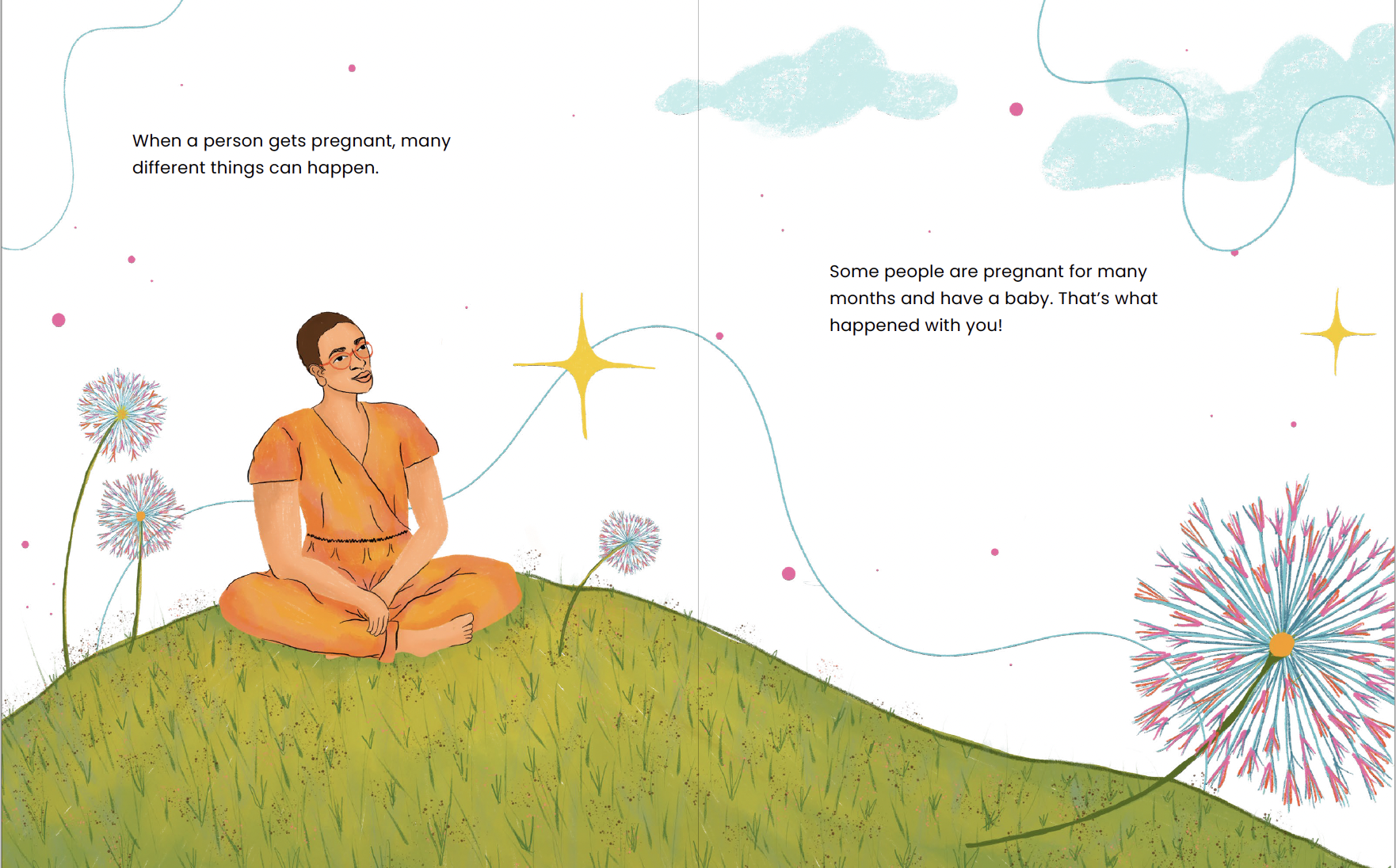
What’s An Abortion, Anyway? is a picture book for children age 8+ that helps fill a gap in kidlit that’s existed for far too long. Children’s literature can be used to create comfortable & necessary conversations between a child, caregivers and teachers. This book is a helpful and beautiful resource to guide children in thinking about reproductive rights and the experiences of those who have abortions.

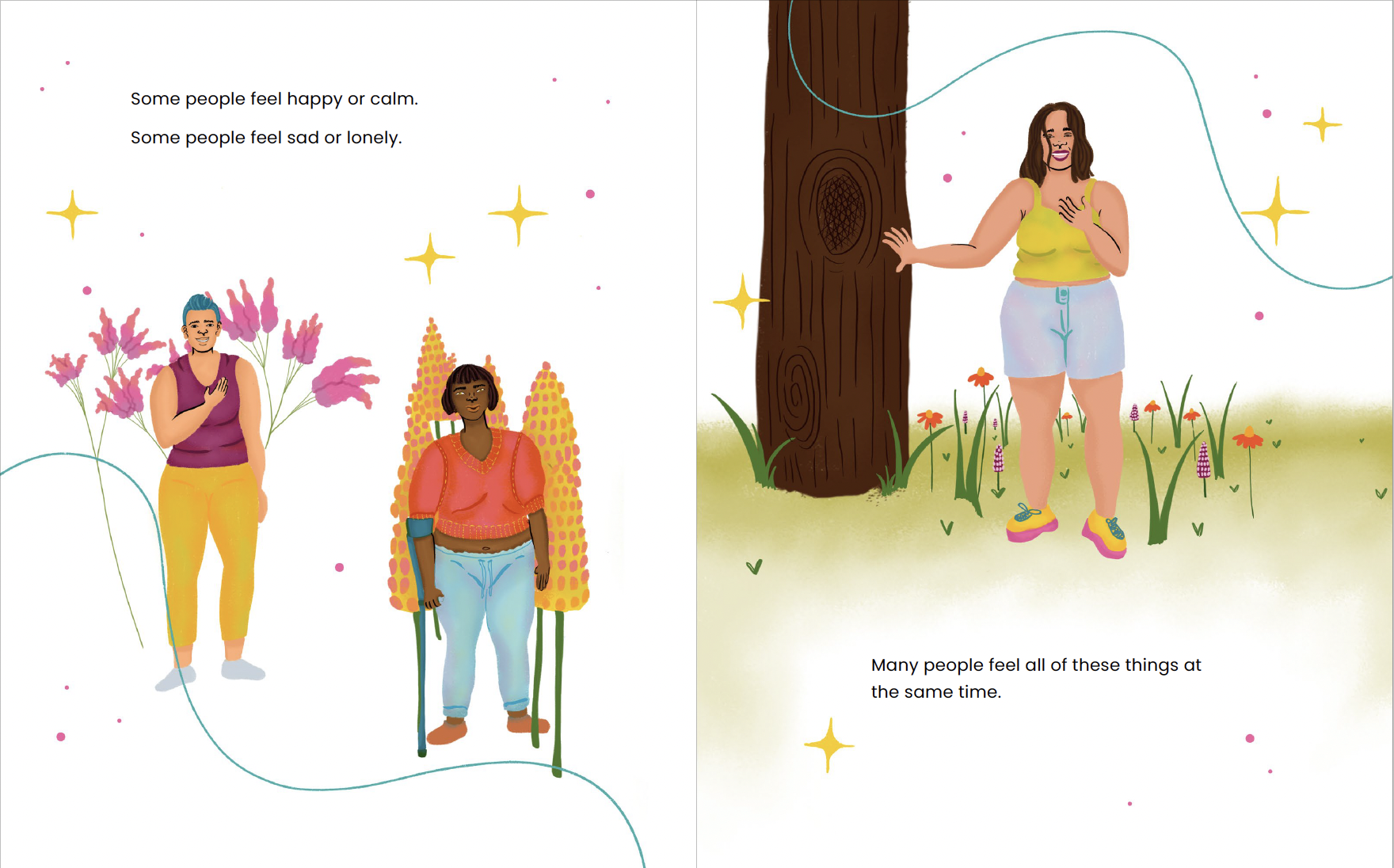
What I love about this picture book is that it is straightforward, pretty and thoughtful. Carly Manes takes great care with her words to ensure that the inclusive language of the book shines & reassures. The words “people” and “persons” are used throughout to remind readers that cis gender women are not the only people who get pregnant and have abortions. This is an important detail. The book, overall, has an extremely chill and comforting vibe, which is achieved through careful choice of words, sparse layout of the spreads and bright and earthy colors. Manes takes the time to delve into the importance of feelings and choices when describing what people who have abortions experience.

Manes also goes into some of the “whys” of the decision to have an abortion. These types of conversations help children explore empathy. This is so crucial when growing small humans. This picture book is a “science book” but it’s also a “feelings” book. Clear communication and allowing space to explore emotion is crucial in helping kids understand what abortions are about and why they are important.

Image Credit: Carly Manes/Emulsify

The spreads of this picture book are open and welcoming. Emulsify does a gorgeous job of expressing emotion through color, line, body language and white space. The use of white space in this book draws the eye towards the blocks of text and to the illustration, inviting quiet reflection. In another thoughtful detail, the illustrations of people in this picture book are all based on people who have had abortions. I love this.

As you read the book, you’ll notice a thin, curved line & bright sparkles that joyfully zip through every spread. This illustrative detail adds levity and a feeling of connectedness as the reader flows through the book. I also especially love the spread where a dark-skinned person with bright pink cornrows stands on the left side of the page while a health clinic sits on the other side, a wide expanse of road connecting them. I believe this scene might depict the experience of many people who have abortions; it is often a contemplative journey. Emulsify really packs a lot of storytelling into this particular spread through excellent use of space & vivid color.

Image Credit: Carly Manes/Emulsify

What’s an Abortion, Anyway? is a joyful and important book for youth. It opens up the discussion of abortions in a respectful and beautiful way that children will be able to connect to. I’m glad that this book exists in our world and that the talents of Carly Manes (abortion doula) and Emulsify (artist, cultural worker and organizer) combined to produce this picture book.

This book was the result of lots of support and love through the website Kickstarter. If you’d like to purchase a copy, check out the Kickstarter link here & the website here.

Take good care, everyone! Let’s keep sharing loving, supportive and empathetic literature with our youth.

Recommended for: Ages 8+
Great for: Family, Community, Abortion, Healthcare, Friendship, Discussion, Empathy, Reproductive Rights
Book InfoWhat’s an Abortion, Anyway? by Carly Manes/Illustrated by Emulsify, 2021 Kickstarter

Grandma’s Tiny House

Grandma's Tiny HOuse

Image Credit: Charlesbridge, JaNay Brown-Wood/Illustrated by Priscilla Burris

Grandma’s Tiny House beautifully affirms Black family-love while being a super clever counting book. It reminds me of Just a Minute! by Yuyi Morales and that’s a pretty remarkable book!

The story begins with Grandma sitting in her very tiny house, waiting for her HUGE family, friends and neighbors to roll through. Dish by dish, pot by pot, all her guests bring delicious treats (mostly soul-food classics) to share. But very quickly, they run out of space until one of her granddaughters has a GREAT idea that’ll keep the party going (without it being a tight squeeze)!

There’s so much to love about this book. First of all, JaNay Brown-Wood’s rhyme is wonderful; simple and strong, with great read aloud/story-time appeal:


SEVEN cool uncles stroll up in a line, / with EIGHT jugs of lemonade, ice-cold and fine.


Continue reading

Thirteen Ways of Looking at a Black Boy

13 Ways of Looking At a Black Boy Cover

Image Credit: Penny Candy Books, Tony Medina & 13 Artists


Black boys have bones and blood / And feelings

Black boys have minds that thrive with ideas / Like bees around a hive / Black boys are alive with wonder and possibility / With hopes and dreams


This is a gorgeous collection of tanka poetry inspired by the brilliance of black boys, the poem Thirteen Ways of Looking at a Blackbird by Wallace Stevens, the poetry collection Twenty-Six Ways of Looking at a Black Man by Raymond R. Patterson and Dr. Henry Louis Gates Jr.’s essay collection Thirteen Ways of Looking at a Black Man.

Medina celebrates black boyhood through thirteen thoughtful & resonant poems. Readers are also treated to artwork from thirteen of children’s literature’s top black illustrators. Many of the poems in this collection were originally paired with photographs of residents of Anacostia, Washington D.C., a historically black neighborhood originally home to Nacotchtank Native peoples.

13Ways1stPoem

Image Credit: Penny Candy Books, Tony Medina & 13 Artists

Continue reading

Always Anjali

Always Anjali Cover

Image Credit: Bharat Babies, Sheetal Sheth/Jessica Blank


“Be proud of who you are Anjali. To be different is to be marvelous.”

Many children (and adults!) can relate to the frustrations that arise from having a name that’s different and unique. Growing up in the 90s, my name (ALIA) confused the heck out of most people. Everyone insisted on spelling it like the singer AALIYAH did and most people struggled with the pronunciation (AH-lia). Nevertheless, I knew that my name was special, that it suited me, that it had Arabic origins and meant “the highest” and “sublime.” Most importantly, it was the name that my parents gave me, and that made me feel pretty dang special.

So often when we feel different and start to wonder why we “can’t be like everyone else,” it’s because society is telling us that some element of our being is “not normal.” “Fitting-in” has, since the beginning of time, all over the world, been a huge part of human society. Society dictates what is considered “normal” and quite often, when indigenous people and people of color (who very often have names that reflect their cultural background) are in white spaces, any bit of “difference” can lead to unkindness, bullying and racism. That can be very tough on a young child!

Always Anjali 1

Image Credit: Bharat Babies, Sheetal Sheth/Jessica Blank


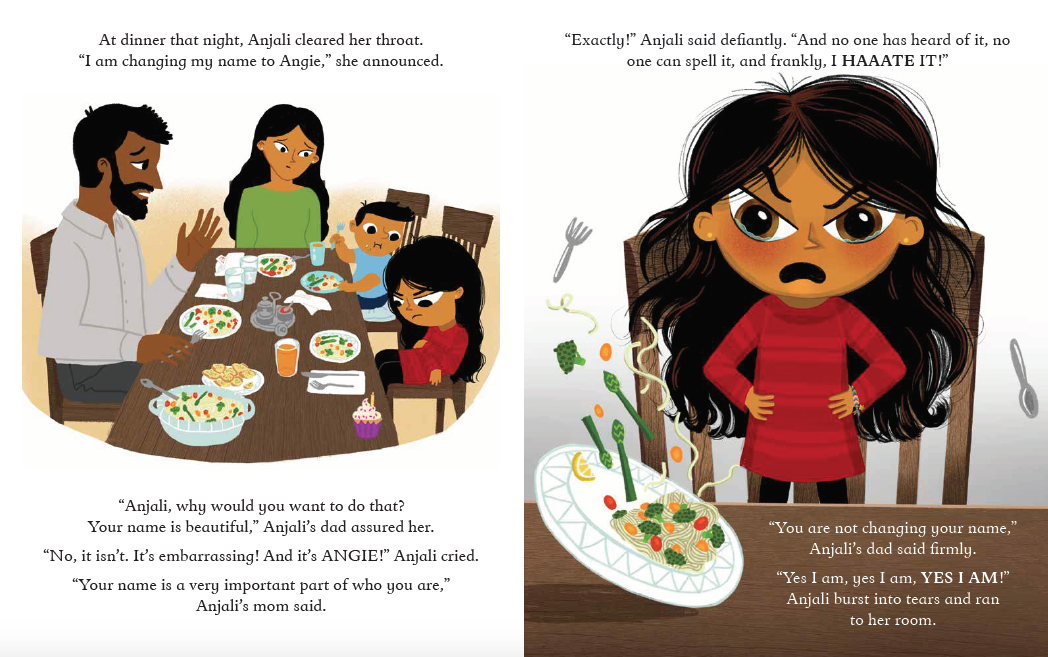
In Always Anjali, Anjali wakes up on her seventh birthday to a shiny new bike. She excitedly heads to a carnival with her best friends Courtney and Mary (take note of their Anglo-names). At the carnival, they stop by a booth to get matching personalized license plates for their bikes. Anjali can’t find her name, though, AND a bully makes fun of her name! This frustrates and maddens her and that night, she declares to her family that she is no longer Anjali! She wants to be called ANGIE instead. Her parents tolerate none of this, of course, and lovingly tell her the meaning of her name. Her name is sanskrit from India and it represents all that is powerful and beautiful about her family and her culture. Late that night, Anjali is inspired and comes up with a beautiful piece of art to share with her friends the next day.
Always Anjali 2

Image Credit: Bharat Babies, Sheetal Sheth/Jessica Blank


Sheth doesn’t shy away from topics of race, stereotypes and bullying in this story. At the carnival, class-bully Zachary taunts her by calling her “An-Jelly.” Sheth & Blank take this situation a step further; in the next scene, Zachary’s shadow is against a red background, and as he holds a ketchup bottle to his forehead, angry white letters shout “PEANUT BUTTER AN-JELLY. CAN I GET A PEANUT BUTTER AN-JELLY WITH A DOT ON TOP?!” Zachary, a white male, stirs up a tired, racist stereotype of Indian people (“dot”) by saying these words to her and putting ketchup on his head to mock a bindi & her culture. He intimidates a young Indian American girl into being ashamed of her name. This is a frustrating but important scene because it’s a situation that many indigenous children and children of color can relate to, especially when they occupy predominantly white spaces/spaces not within their communities.

Though this picture book touches on tough topics, there’s also a lot of joy and brightness to balance. I love the cheery, vibrant illustrations in this book. Blank does an excellent job of portraying Anjali’s positive and colorful energy. She also shows us Anjali’s passion and frustration. The digital illustrations have a hazy, soft feel at times and Anjali’s emotions are on full display through her large, expressive eyes & eyebrows.

Always Anjali is a delightful story of confidence, friendship and family. Names are important. We are always a reflection of those who’ve come before us and names tell the world who we are. This book reminds children, especially children with special names & names that reflect their culture, that they have absolutely no need to hide their shine.


P.S. The book Alma and How She Got Her Name by Juana Martinez-Neal pairs perfectly with Always Anjali!  😉


Recommended for: 2nd Grade and up
Great for: Confidence, Family, Peer Pressure, Friendship, Cultural Diversity, Indian American, Self Esteem, Pride, Bullying
Book InfoAlways Anjali by Sheetal Sheth/Illustrated by Jessica Blank, 2018 Bharat Babies, ISBN: 9781684019687
Muhiima’s Quest

Muhiima's Quest Cover

Image Credit: Library and Archives Canada (LAC), Rahma Rodaah/Daria Horb

Muhiima wakes up with a special feeling on her birthday; she has no idea that an adventure is coming her way! Because she’s Muslim, she usually doesn’t celebrate her birthday, but on this day, her family has a surprise for her. Her mother gives her an old map that leads her to family members and friends around town. All of these people tell her positive affirmations, encourage her to continue being a smart, kind and intelligent girl and give her small purple boxes. Her grandmother, while knee deep in the rich earth of her garden, says to her:

“Don’t forget your roots; they are what ground you, nourish you and make you who you are. Your roots contain your history and support you as you grow into the future.”

Muhiima makes her way back home to discover the meaning of the purple boxes; everyone’s small gift makes one beautiful & meaningful gift, just for her! As a Muslim girl, she often wonders why she can’t be like other kids who have fun birthday celebrations. Her family gifts her with a quest to teach her that even though she doesn’t get a birthday party every year, they’re proud of her and are always behind her, rooting for her! What an important message for a young child.

MuhiimasQuest2

Image Credit: Library and Archives Canada (LAC), Rahma Rodaah/Daria Horb


This is a quiet story of familial love, religion and growing up. Muhiima has the constant support and encouragement of her family; it takes a village to raise a child. I love how central religion is in this book; Muhiima is reminded to always be a faithful servant of God by being a good person (they go hand in hand). This book is also about the every day life of a contemporary Muslim family; Muhiima’s dad owns a bookstore, her aunt has a henna salon, her uncle plays pick-up basketball with friends and she stops at her mosque to visit her Sunday school teacher. There are not enough picture books that celebrate Muslim families and Muslim children. One thing that I would’ve loved to see in this story is more of Muhiima’s thoughts. She receives a lot of knowledge from her elders but other than knowing how sad she is to not have a fancy birthday party, we don’t get to learn more about her. That being said, I think this is an important book and I’m so glad to have it to recommend!

The illustrations of this book are so sweet. Soft pinks, reds, browns and yellows fill the pages. Watercolor is the perfect medium for this story’s art; the colors are bright and full. From the beautiful pink of Muhiima’s bedroom to the deep browns of her grandparents’ backyard garden, color is important to this story. I love the scene where Muhiima visits her stylish Auntie in her henna salon. Her aunt’s dress is stained with henna as she smiles fully, happy to see her niece. The mood of the salon is warm and inviting.

I hope you’ll take a moment to seek out this awesome self published book by Rahma Rodaah and Daria Horb! Here’s to more stories about young Black Muslim girls on our bookshelves and in our homes!


Recommended for: All ages!
Great for: Family, Love, Religion, Islam, Community, Relationships, Celebration, Black Girl Magic, Discussion, Self Published, Diverse Books, Cultural Diversity
Book InfoMuhiima’s Quest by Rahma Rodaah/Illustrations by Daria Horb, 2017 Library and Archives Canada (LAC)/Rahmarodaah.com, ISBN: 9780995922907/9780995922921

Take a Picture of Me, James VanDerZee!

Take a Picture of Me,James VanDerZee Cover

Image Credit: Lee & Low Books Inc., Andrea J. Loney/Keith Mallett

I’m so last minute this year, y’all! But bear with me…It’s still Black History Month and I got a post for you… 😀

~*~

Another year, another Black History Month, another influential black soul to celebrate. I’m currently basking in the glory of the smash hit film Black Panther. All the black excellence in that film reminded me of another Black Creative who made it his life’s work to represent black excellence through photography.

James VanDerZee made black people look

Glamorous. Regal. Distinguished

at a time when black photography was very static. VanDerZee made it his business to show Black People Shining.

Take a Picture of Me, James VanDerZee! is one of my favorite non-fiction picture books of 2017. In it, we follow young VanDerZee from boyhood to his elderly years. Born into a middle class black family in Lenox, Massachussetts, he was frustrated as a child by his inability to capture fine details and accuracy when drawing people. When he discovered photography, he became fascinated and worked diligently to get his own camera (becoming only the second person in his town to have one)! VanDerZee, always a people person, had natural talent and worked to make his subjects feel comfortable; he wanted to make people look AND feel good while in his studio. At age 18, VanDerZee moved to bustling and vibrant Black Harlem, where he soared as a young artist. He’d later start his own studio where he’d photograph middle class Black Harlem as well as dignitaries, celebrities and athletes. VanDerZee is famous for his high level of skill in retouching (essentially early Photoshop) and photomontage.

Continue reading

Patina (Track #2)

Screen Shot 2018-01-27 at 9.50.20 PM

Image Credit: Atheneum/Caitlyn Dlouhy Books (Simon & Schuster), Jason Reynolds/Vanessa Brantley Newton


Happy New Year everyone!

I’m kicking off this year on Read It Real Good by inviting a friend to share a review. I met Chisom Onyeuku last year at Kweli Journal’s The Color of Children’s Literature Conference in NYC. Not only is he a kind person, he cares a lot about diverse books, representation and great stories, so it was a no-brainer to invite him here to share a bit of his writing with you. 🙂 He’s currently working on a middle grade novel titled Life in the Flats. If you’d like to talk to him about his review, you can find him on Facebook.


Patina by Jason Reynolds

Review by Chisom Onyeuku

~*~

Sports stories have always been some of my favorites. When done right, they can encapsulate action, adventure, romance and highly personal stakes. For that reason, I was excited to pick up the first book of Jason Reynolds’ Defenders track series, GHOST, especially after I found out it was about a black boy coming into his own. GHOST was easily one of my favorite reads of 2017 and so when I found out that there would be a sequel, I knew I had to read it. PATINA picked right back where GHOST left off. What makes PATINA great is that although it takes place in the same “Defenders” universe, Patina’s story feels markedly different from Ghost’s. I love how the track becomes a catalyst for Patina to find comfort amidst some difficult circumstances and I enjoyed the interactions between Patina and her teammates.

When I encountered Patina at the beginning of the book, I was elated that, through her eyes, we get to watch Ghost finish the race from the end of the previous book. I won’t spoil the race but Jason expertly plays on the audience’s expectations to create a suspenseful scene. From there, we fully cross into Patina’s story arc.

Like Ghost, Patina has deeply personal reasons for running track that resonated with me as a former athlete. More importantly, they resonated with me as a person. Like every great novel, I found myself not only empathizing with the main character but also her friends and teammates. I appreciated that Jason introduces Patina’s surface motivations for running track before delving deeper into the story.

The pace of the book is much like a 400-meter dash. Out of the gate, Patina is running to prove to everyone that “Patty ain’t no junk.” By the 200-meter mark, she’s dealing with challenges of school and adapting to her new teammates. And the last 100 meters are focused on her family. After all of these stretches, we finally have a moment of quiet with Patina and her uncle. Like the diner scene from Ghost, I was caught off guard by how close that moment brought me to tears. It gave me time to appreciate Patina’s journey and growth but I was also reminded that no matter what she had been through, she still had her family and friends. She didn’t have to bear the weight of her struggles alone; a lesson that we should all be reminded of from time to time.

Like Patina, I had teammates that became friends who I now consider family. I feel like I’m watching that bond form between The Defenders. A large portion of the story revolves around Patina’s work with her relay teammates. Luckily, Ghost, Sunny and Lu are never too far away. You can see how much their bond has evolved since their formation. Even though PATINA stands alone, the story still feels part of something bigger. I consider that one of the markers of great series writing.

Jason has a knack for drawing you in with his writing and taking you on an emotional roller coaster. Growing up, I didn’t see myself in a lot of literature. However, I did when I encountered Ghost for the first time. Patina could have easily been a teammate and friend of mine. As I walked with them through their respective journeys, I was reminded of why I love sports stories so much. No matter what you bring to the track or to the page, you will always walk away with more than you brought to it.


Recommended for: 5th Grade and up
Great for: Friendship, Diversity, Teamwork, Track and Field, Sports, Middle School Life, Determination, Black Girl Magic
Book InfoPatina by Jason Reynolds/Jacket Illustrations by Vanessa Brantley Newton, 2017 Atheneum/Caitlyn Dlouhy Books (Simon & Schuster), ISBN: 9781481450188


Where’s Halmoni?

Where'sHalmoni

Image Credit: Little Bigfoot (Sasquatch Books), Julie Kim

Where’s Halmoni? works on so many fantastic levels. It’s an #ownvoices graphic novel/picture book about two Korean-American siblings and their experience over their grandmother’s house. Simple right?? Nope! Just like the Korean folktales and characters that inspire this work, there’s a delightful mix of fantasy and realism. Kim’s portrayal of everyday Korean life (it’s in the little details) adds another important level of depth to this epic debut.

So let’s start with the story. Details, Details, Details! The story actually begins and ends on the endpages (cool right?). Grandma receives a package from Korea and inside the box is a wooden window she places on the wall of her bedroom. A tiger’s head pop out the window and the next thing we know, Grandma says “Aaah! Bad tiger!” in Korean and the story begins. Joon and his Noona (“누나 older sister” her name is not Noona, it’s what younger boys call older girls in Korean) let themselves into Grandma’s house only to find…that she’s missing!! There are clues to her disappearance though (enormous cat paw prints and a disheveled kitchen) and the kids discover the curious window in her bedroom. In a very Narnia-esque turn of events, they step through the window into a world straight out of Korean folklore. On the search for their grandma, they run into a tricky (and silly) rabbit 토끼, a rowdy and hungry bunch of goblins 도깨비, and finally, an untrustworthy tiger 호랑기 fighting over Grandma’s pot of delicious red bean porridge 팥죽 with a nine-tailed fox 구미호 (who suspiciously looks a bit like grandma)!! How far will they go to find and save their grandma?

Continue reading